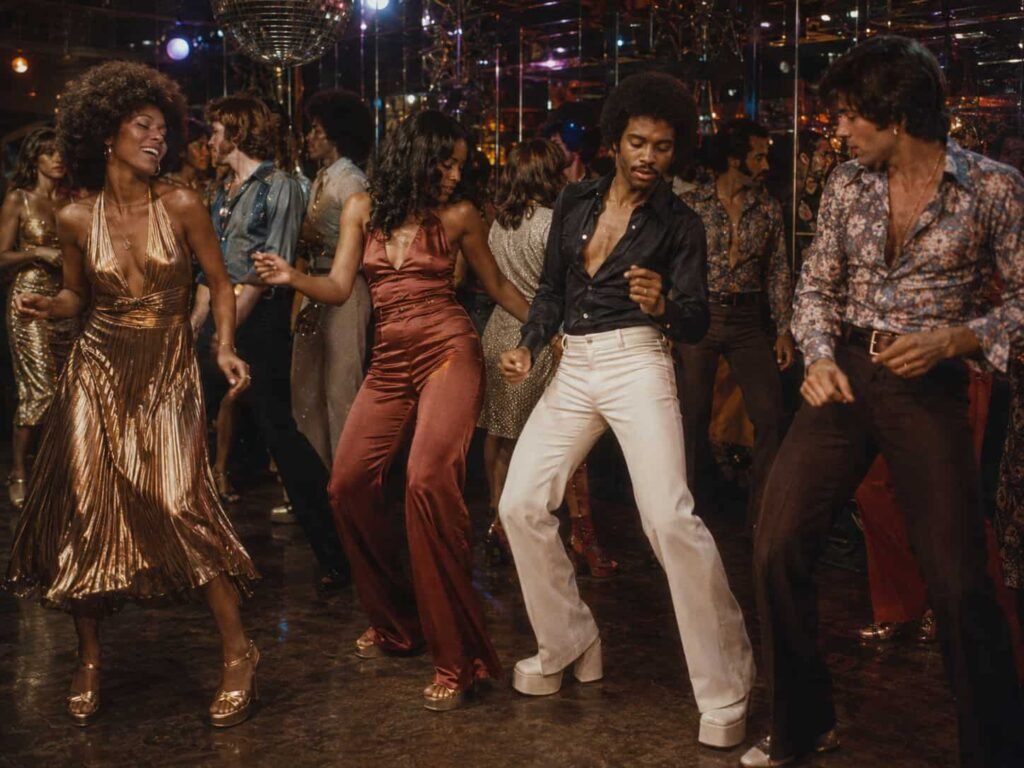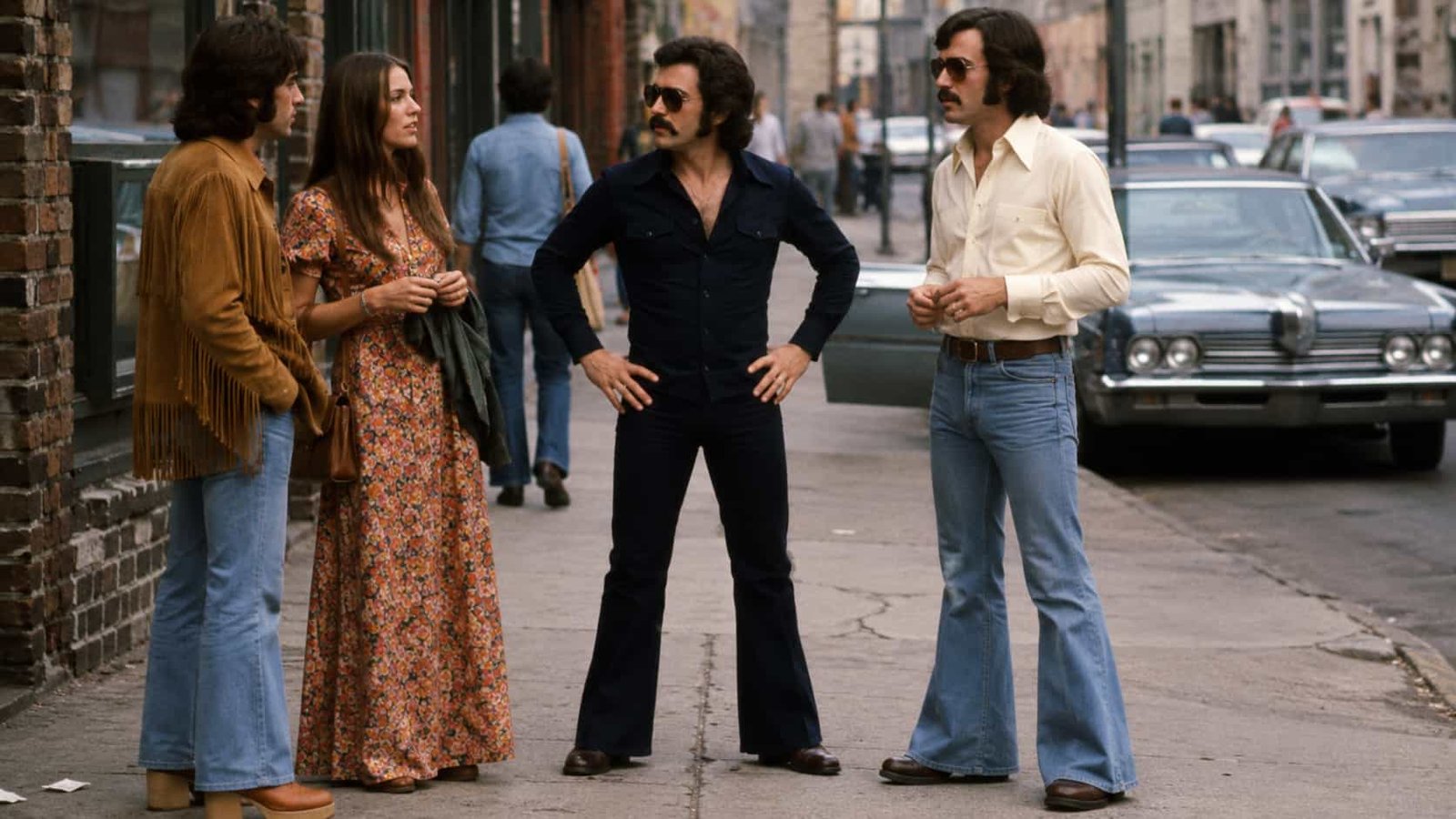
Fashion in the 1970s was far more varied than the usual pictures of disco balls and enormous flared trousers suggest. What people wore depended on the year, the occasion, the music they listened to, and sometimes even the city they lived in.
The early 70s still carried many influences from the late 1960s. Clothing was relaxed, earthy, and often inspired by folk and hippie styles. Later in the decade, outfits became sharper, shinier, and more suited to nightlife. Denim, suede, polyester, satin, and bold prints could all appear in the same wardrobe.
These ten trends were among the most recognizable styles seen throughout the 1970s.
1. Bell-Bottom Pants
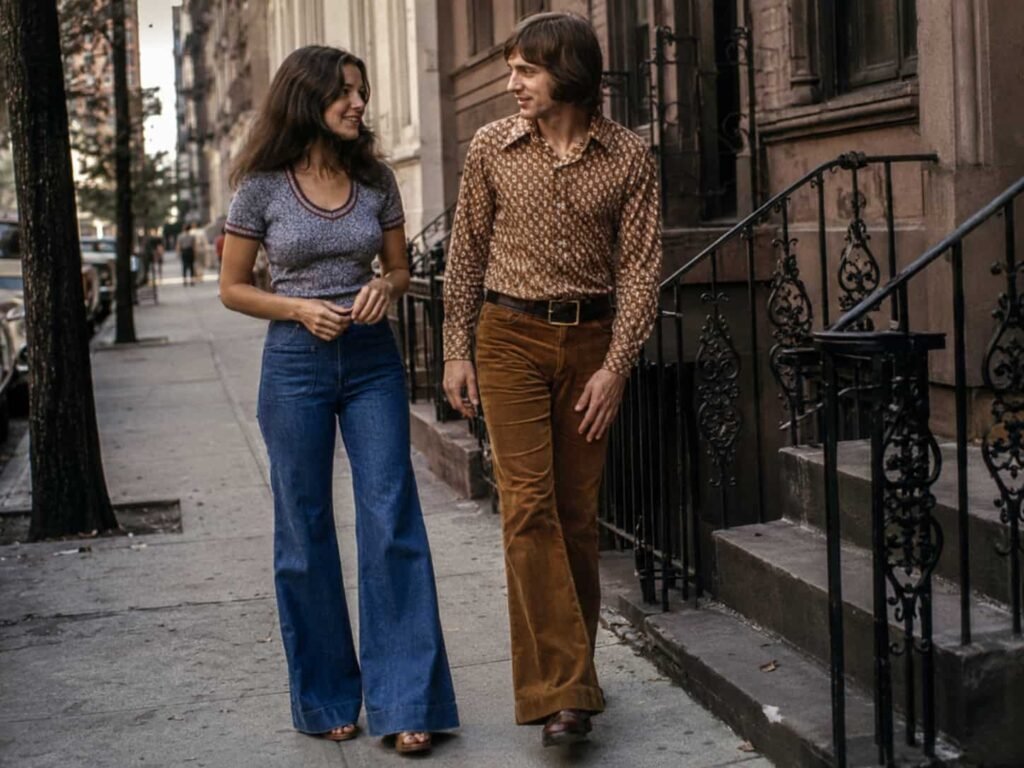
Bell-bottoms are probably the first item most people picture when they think about 70s clothing. They fitted closely around the hips and thighs before widening below the knee.
Both men and women wore them. Denim was common for everyday use, but flares were also made from corduroy, velvet, polyester, and patterned fabrics. Some had a subtle flare, while others became extremely wide near the ankle.
They were often worn with tucked-in shirts, fitted knitwear, cropped jackets, or peasant blouses. Platform shoes made the silhouette even more dramatic.
Flares were not limited to disco clubs. They appeared in schools, offices, shops, concerts, and ordinary family photographs throughout the decade.
2. Platform Shoes
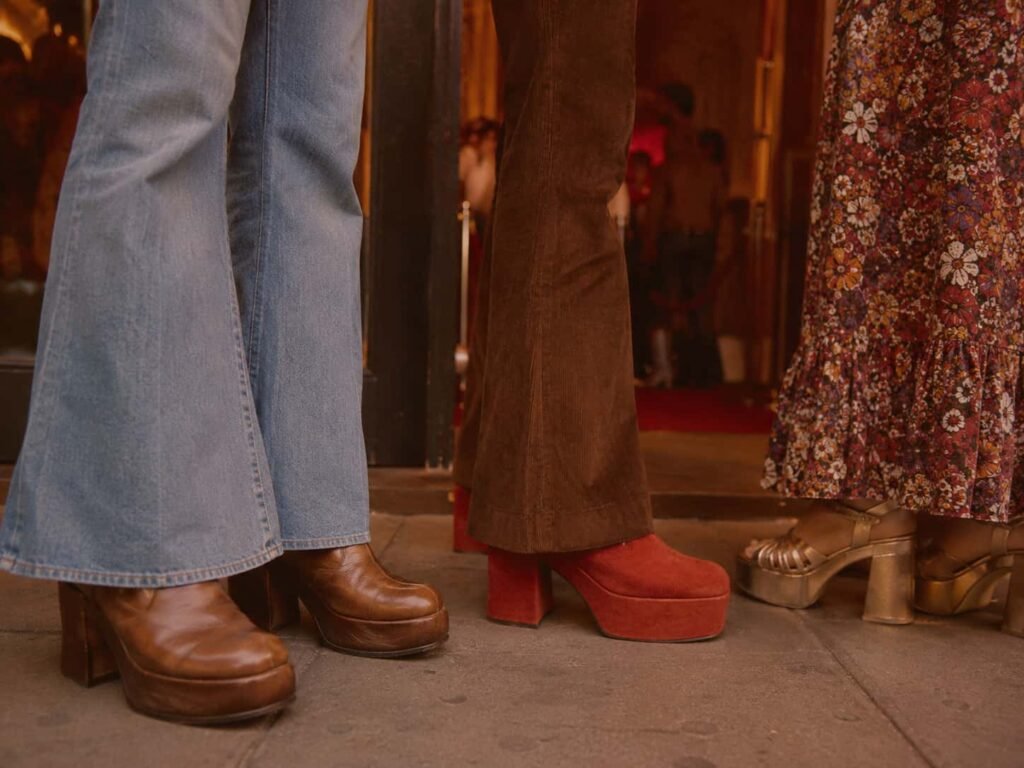
Platform shoes became increasingly popular as the 70s progressed. The thick sole added height beneath the entire foot, making them easier to recognize than a standard high heel.
Women wore platforms with dresses, jumpsuits, skirts, and flared trousers. Men also adopted them, especially in glam-rock and disco-inspired outfits.
The designs ranged from fairly simple leather shoes to brightly colored styles decorated with metallic finishes, glitter, or unusual heel shapes. Some pairs looked elegant, while others were deliberately extravagant.
They were not always comfortable or practical, but they matched the confidence and theatricality of late-70s fashion.
3. Maxi Dresses
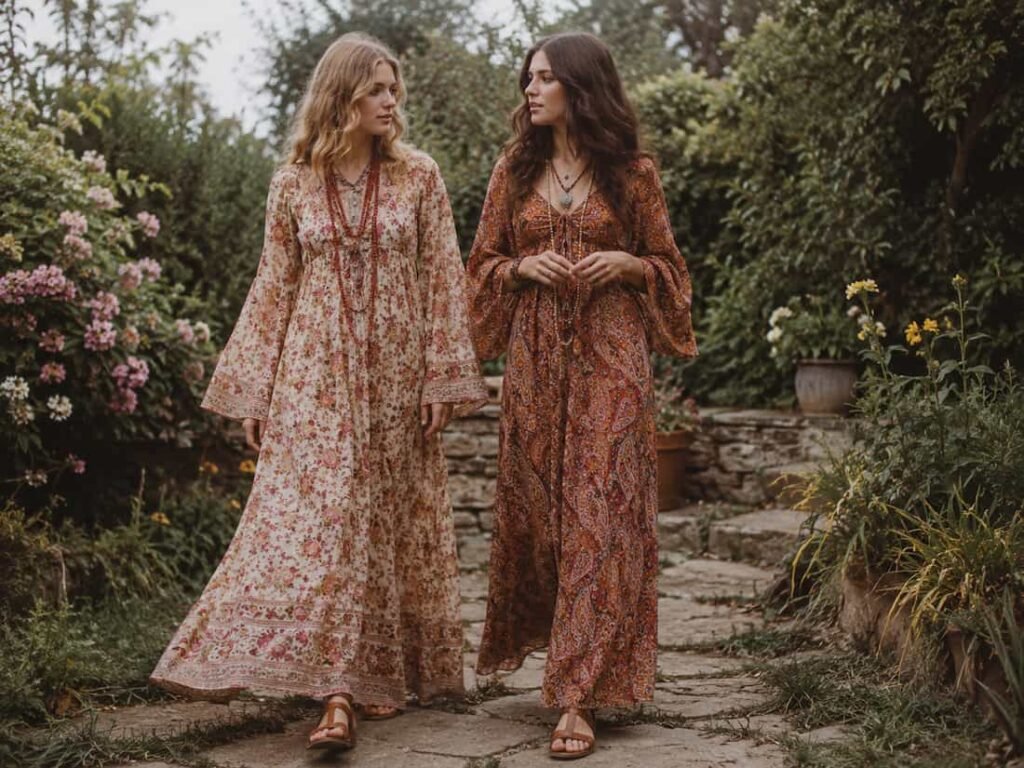
Long maxi dresses were especially popular during the first half of the decade. They reflected the softer, bohemian side of 70s fashion and were worn for both casual and formal occasions.
Typical designs included floral prints, paisley patterns, wide sleeves, high necklines, tiered skirts, and lightweight fabrics. Some dresses were loose and flowing, while others were shaped around the waist.
Women often combined them with leather sandals, boots, long necklaces, and wide-brimmed hats. Natural or loosely styled hair completed the look.
Unlike some of the decade’s more extreme outfits, maxi dresses were comfortable and easy to wear, which helped make them popular with a wide range of women.
4. Jumpsuits
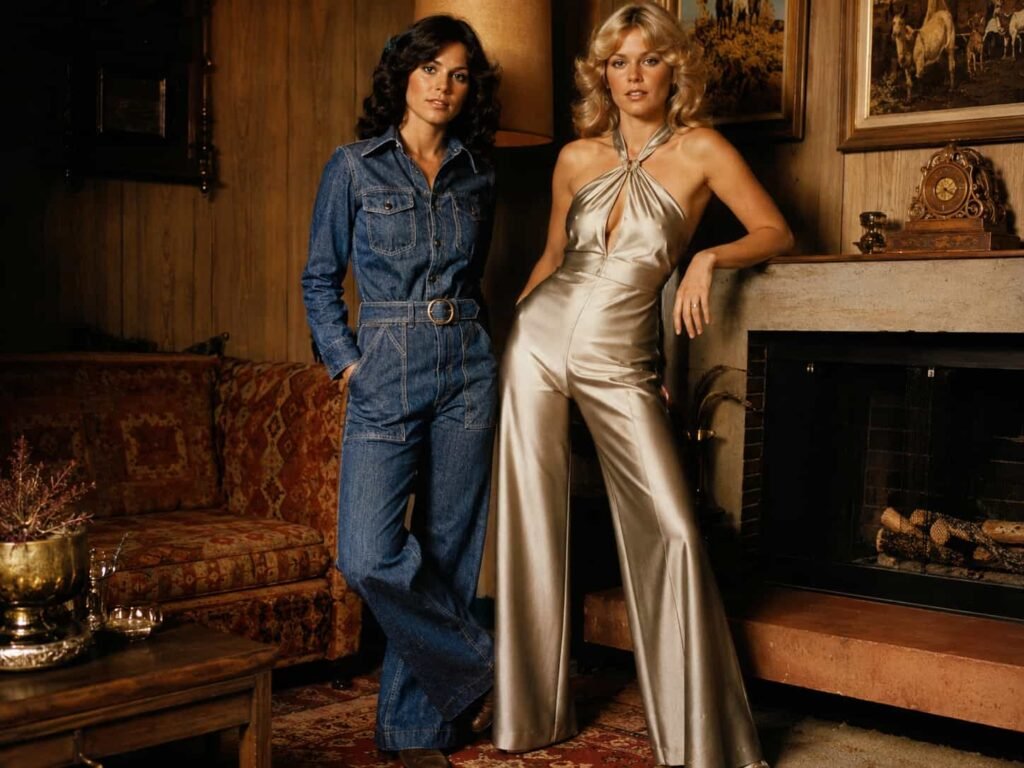
The jumpsuit offered a complete outfit without the need to match separate pieces. During the 70s, it appeared in everything from casual workwear-inspired styles to glamorous evening clothing.
Daytime jumpsuits were often made from denim, cotton, or practical synthetic fabrics. They commonly featured buttons, belts, large pockets, and short or long sleeves.
Evening versions were more dramatic. Wide legs, halter necklines, low-cut fronts, shiny fabrics, and fitted waists made them particularly suitable for clubs and parties.
A jumpsuit paired with platform shoes created a long, streamlined shape that became strongly associated with late-70s nightlife.
5. Suede and Fringe
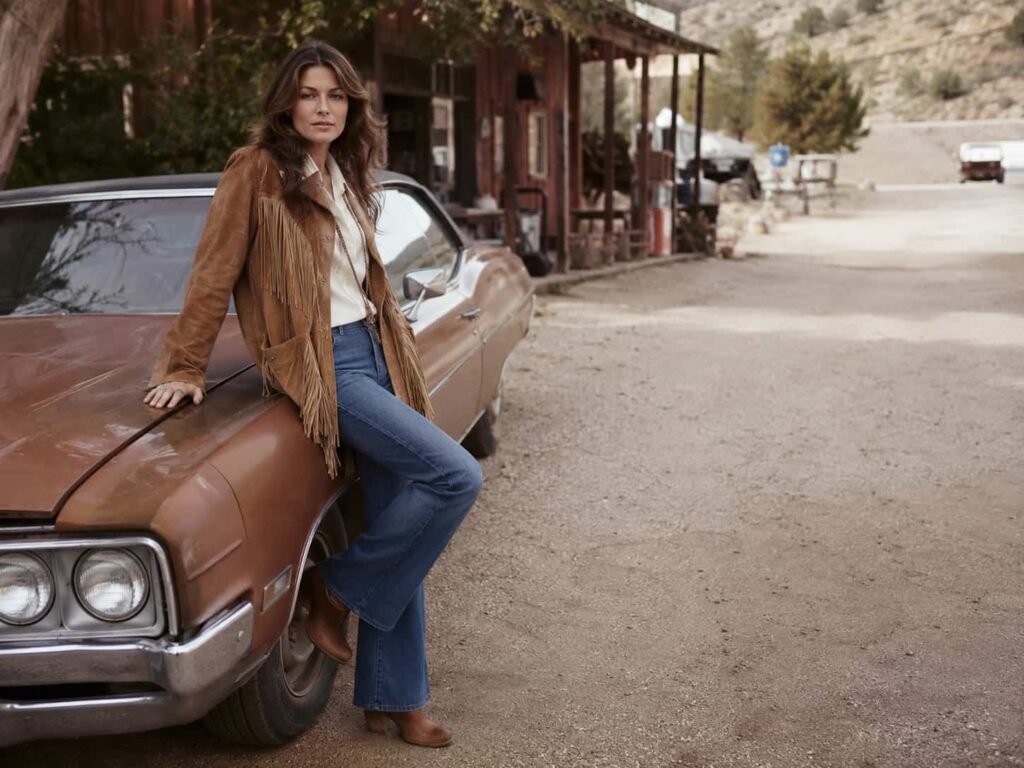
Suede jackets and vests were common during the early 1970s, often decorated with long strips of fringe across the chest, back, or sleeves.
The look drew heavily from western clothing, folk styles, and the counterculture of the previous decade. Tan and brown were the most familiar colors, although suede also appeared in rust, dark green, and burgundy.
Fringed jackets were usually worn with faded jeans, boots, patterned shirts, or long skirts. Suede also appeared in handbags, skirts, waistcoats, and knee-high boots.
The movement of the fringe gave even a simple outfit more character, especially when worn at festivals, concerts, or outdoor gatherings.
6. High-Waisted Denim
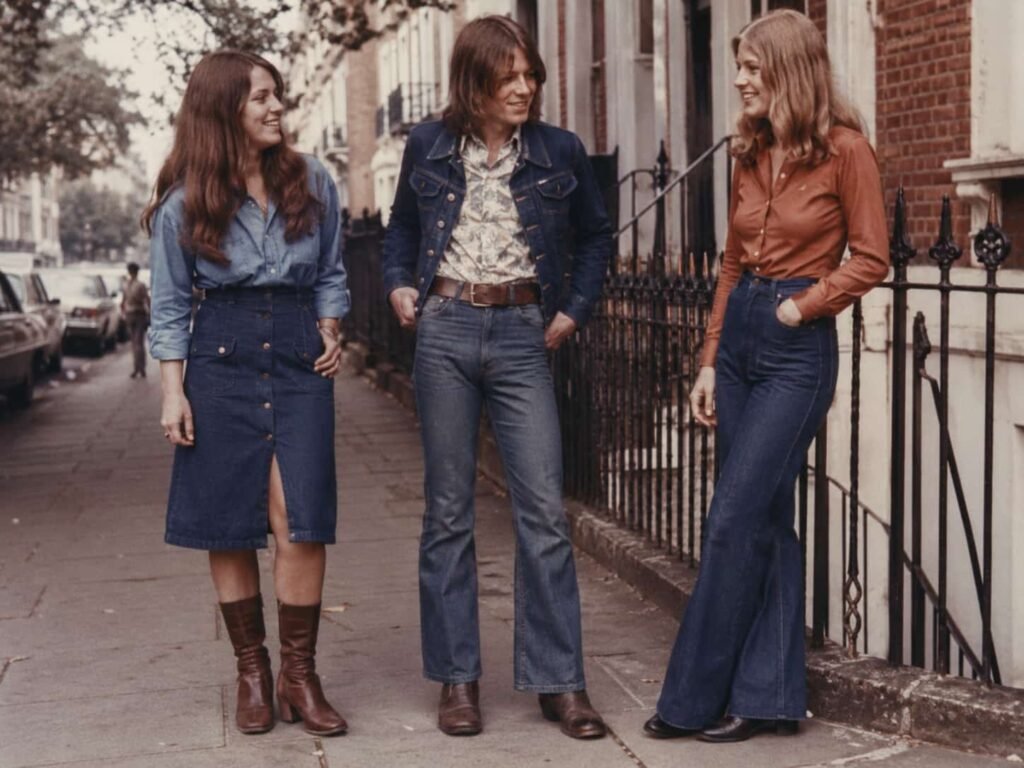
Jeans in the 1970s generally sat much higher on the waist than most modern styles. They were fitted around the hips and could continue into straight, wide, or flared legs.
High-waisted jeans were commonly worn with shirts or tops tucked inside. This created a clean waistline and made the legs appear longer.
Denim also expanded beyond jeans. Jackets, shirts, skirts, dresses, waistcoats, overalls, and matching denim sets all became common.
Many people customized their denim with patches, embroidery, studs, or hand-painted details. Others preferred darker, more structured jeans that could be dressed up with a blouse or jacket.
Denim was affordable, durable, and easy to combine, making it one of the most practical parts of a 70s wardrobe.
7. Leisure Suits and Wide Collars
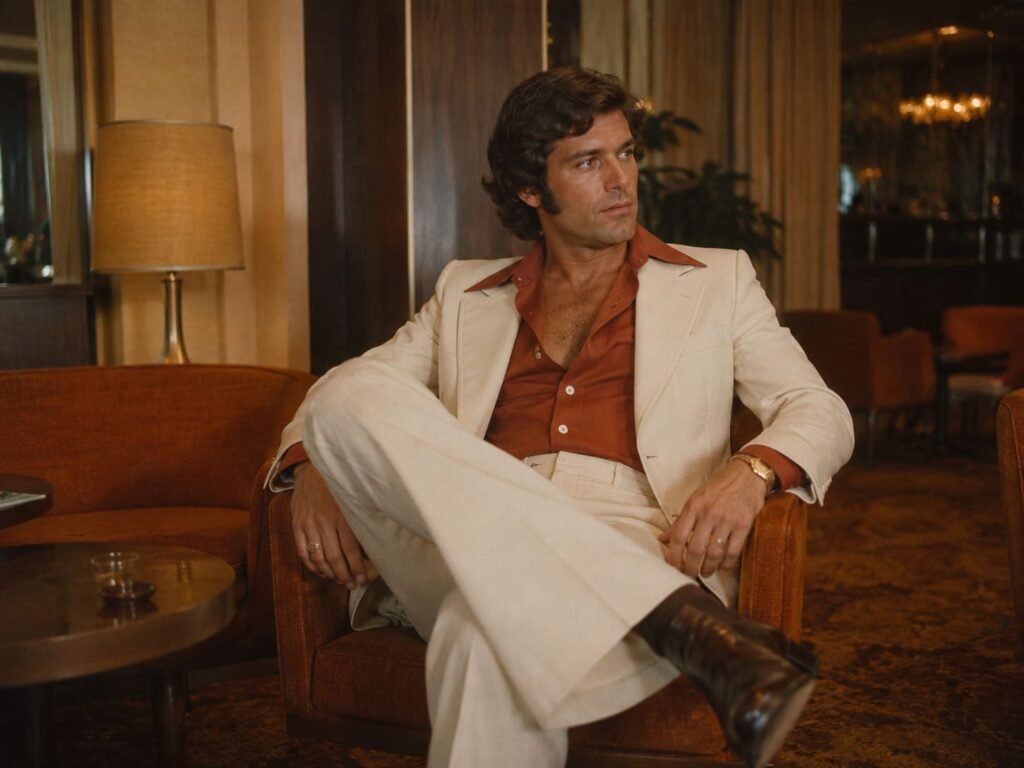
The leisure suit became a familiar part of men’s fashion during the decade. It usually consisted of matching trousers and a lightweight jacket, often made from polyester.
Unlike a traditional business suit, the leisure suit was intended for informal occasions. Men wore it to restaurants, parties, social events, and nightclubs.
The jacket was usually combined with a shirt featuring an oversized pointed collar. Shirts came in bright colors, bold patterns, or shiny fabrics and were often left open at the neck.
Brown, cream, pale blue, green, mustard, and rust were all popular choices. Although leisure suits are often treated as comic costumes today, they were considered modern and stylish at the time.
8. Wrap Dresses
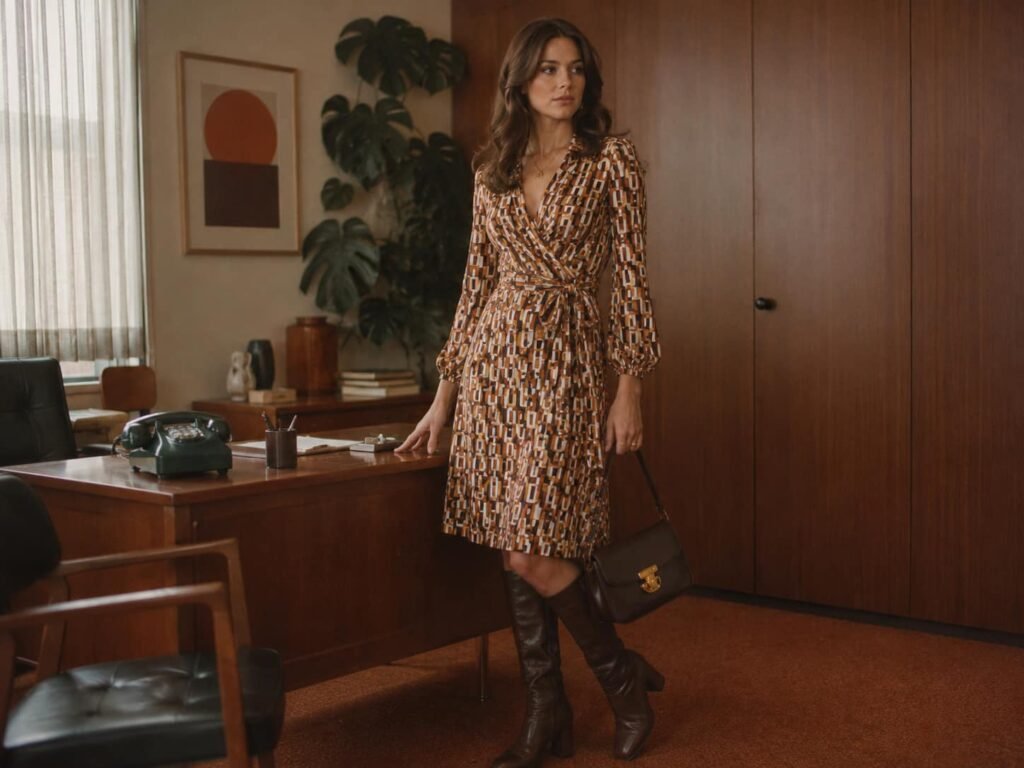
The wrap dress became a popular choice for women who wanted clothing that felt polished without being restrictive.
The dress crossed over the front and tied around the waist, creating a V-shaped neckline and an adjustable fit. It worked well on different body shapes and could be worn in offices, restaurants, or at social events.
Many wrap dresses featured geometric, floral, or abstract prints. Others came in solid colors and were styled with boots, heels, or simple jewelry.
The design suited the changing routines of women during the 70s. It was easy to put on, comfortable enough for a full day, and formal enough for professional settings.
9. Peasant Blouses
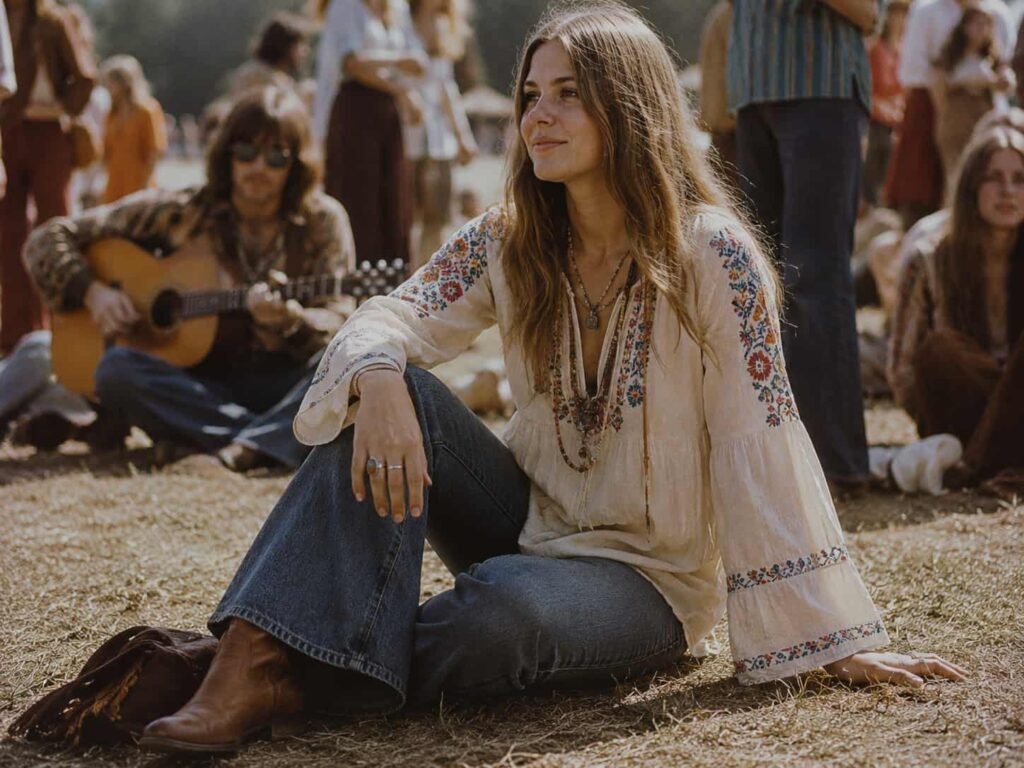
Peasant blouses were an important part of bohemian fashion. They were usually loose-fitting and featured gathered necklines, puffed sleeves, embroidery, lace, or decorative stitching.
They were often paired with flared jeans, long skirts, suede vests, or layered necklaces. White and cream were common, but colorful embroidered versions were also widely worn.
The style drew inspiration from traditional folk clothing and suited the preference for natural fabrics and handmade details.
Peasant blouses were especially common during the early 70s, although variations remained popular throughout the decade. Their relaxed shape made them suitable for everyday wear rather than only special occasions.
10. Disco Fashion
Disco fashion became most visible during the second half of the 1970s. Nightclubs encouraged clothing that moved well, reflected light, and stood out in a crowded room.
Women wore satin trousers, metallic dresses, halter tops, sequined clothing, and fitted jumpsuits. Men chose open-neck shirts, fitted jackets, flared trousers, leisure suits, and platform shoes.
White, black, silver, gold, and rich jewel tones appeared frequently. Shiny fabrics and dramatic accessories looked especially effective beneath colored nightclub lighting.
Not everyone dressed this way during the day, but disco had a strong influence on evening wear, hairstyles, makeup, and popular culture.
From everyday denim to elaborate nightclub outfits, 70s fashion was much more diverse than the stereotypes suggest.