

A price from the 1970s can look almost unbelievable today. A gallon of gasoline cost less than a dollar, a movie ticket was only a few dollars, and newspaper advertisements regularly offered groceries for a handful of coins.
But the decade did not have one fixed set of prices. What something cost in 1970 could be very different from its price in 1979. Inflation accelerated, energy costs rose, and wages struggled to keep up. By the end of the decade, many Americans were paying more than twice as much for certain everyday expenses.
The figures below refer to the United States and use national averages or nationwide statistics where available.
A Quick Look at 1970s Prices
| Item | Early 1970s | Late 1970s |
|---|---|---|
| Median household income | $8,730 in 1970 | $16,530 in 1979 |
| Federal minimum wage for covered workers | $1.60 in 1971 | $2.90 in 1979 |
| Median new-home price | $23,600 in January 1970 | $61,500 in December 1979 |
| Average retail gasoline price | About $0.36 per gallon in 1970 | About $0.86 per gallon in 1979 |
| Average movie ticket | $1.65 in 1971 | $2.47 in 1979 |
| First-Class stamp | $0.06 in 1970 | $0.15 in 1979 |
| Public four-year college tuition and fees | $394 in 1970–71 | $738 in 1979–80 |
These figures come from historical Census Bureau, Labor Department, Postal Service, education, energy, and cinema records. Some are annual averages, while the home prices are snapshots from the specified months.
Prices Rose Sharply During the Decade
The numbers printed on paychecks became larger during the 1970s, but so did the numbers on price tags.
The Consumer Price Index rose from an annual average of 38.8 in 1970 to 72.6 in 1979. That means the general price level increased by approximately 87 percent in nine years. Inflation reached 11 percent in 1974 and 11.3 percent in 1979, making rising prices a constant concern for households.
Median household income increased from $8,730 in 1970 to $16,530 in 1979. That appears to be a major improvement until inflation is taken into account. Income had nearly doubled on paper, but the cost of living had risen by almost the same proportion.
The late 70s were especially difficult. Energy prices surged again in 1979, while food, rent, transportation, and other household expenses continued to climb. The problem was not simply that luxuries became more expensive. Families saw the cost of ordinary weekly purchases rise again and again.
What Did Groceries Cost?
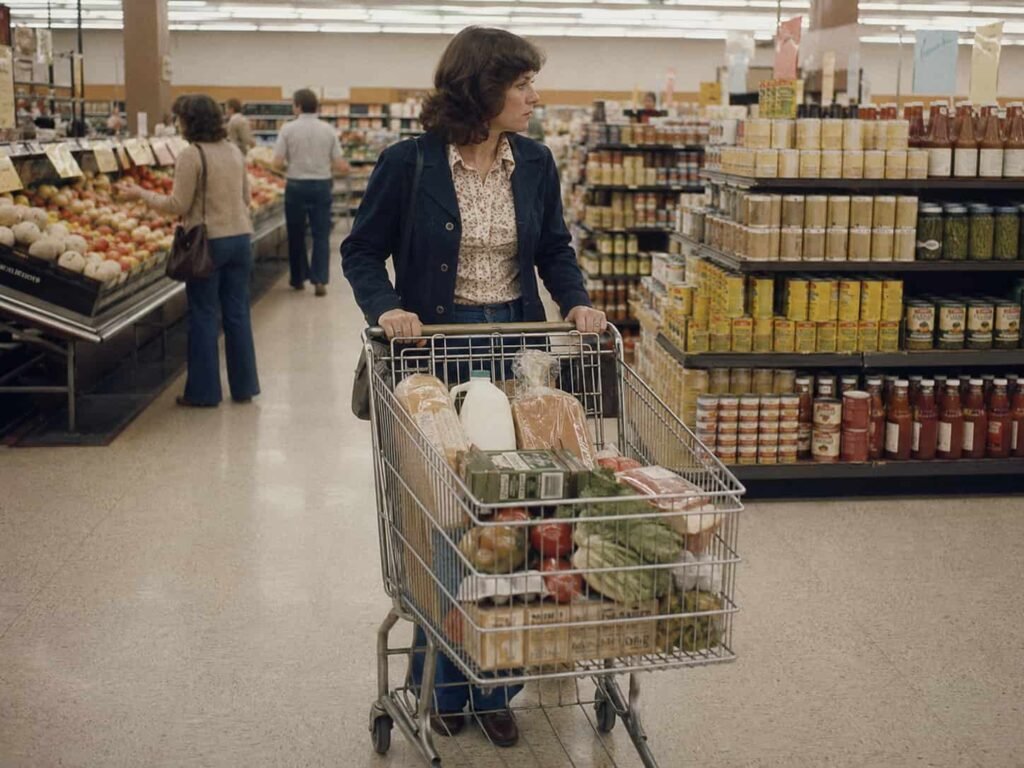
Historical supermarket advertisements show just how inexpensive individual items can appear to modern readers. Bread, vegetables, soft drinks, and some cuts of meat were regularly advertised for less than one dollar, although these were often local promotional prices rather than national averages.
The location and date mattered considerably. Food prices varied between states, stores, seasons, and individual products. A discounted price in one newspaper advertisement does not necessarily represent what every American shopper paid.
Food prices also rose sharply during the decade. U.S. food inflation reached a twelve-month peak of 20.3 percent in December 1973. The food index then increased another 12.2 percent during 1974.
Meat, dairy products, grains, sugar, and produce all experienced periods of significant price increases. A shopping bill from 1970 therefore cannot represent the entire decade. Someone filling a cart in 1978 or 1979 would generally have paid noticeably more for many of the same products.
Buying a Home Became Much More Expensive
Housing produced some of the decade’s most dramatic increases.
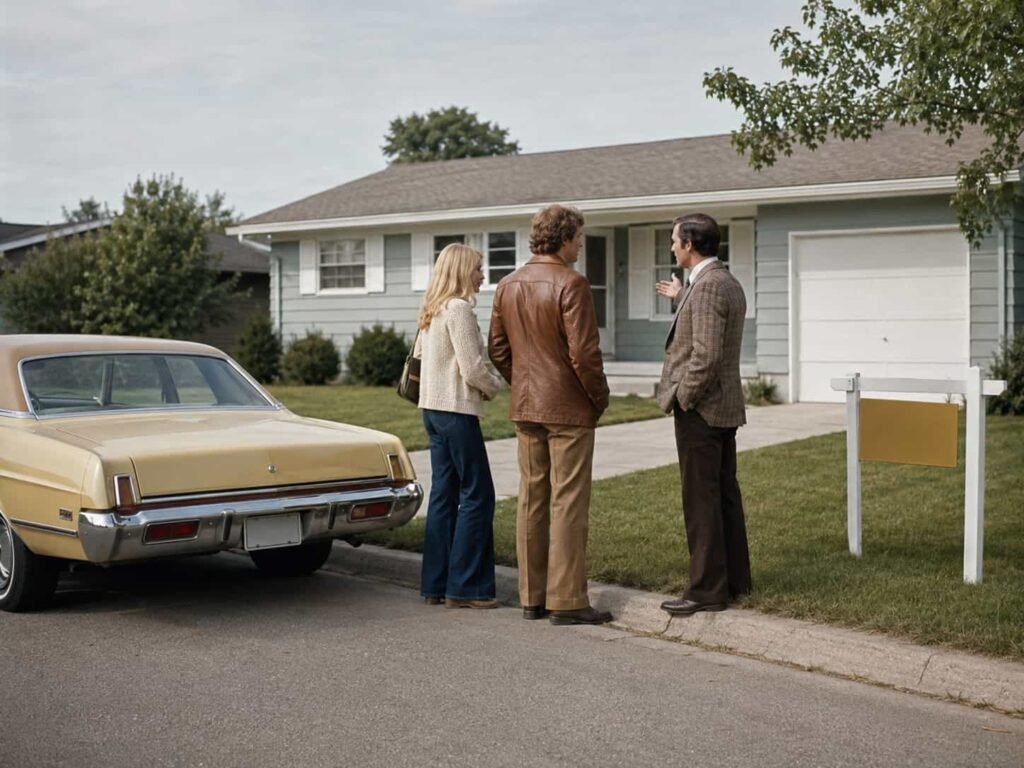
The median sale price of a newly built American home was $23,600 in January 1970. In December 1979, it was $61,500. Monthly figures moved up and down, but the overall direction was clear: the price of a new home rose much faster than household income.
Census figures for existing owner-occupied homes tell a similar story. The national median home value was $17,000 in the 1970 Census and $47,200 in the 1980 Census.
Using January 1970 and December 1979 as snapshots, the median new-home price increased from about 2.7 times median household income to approximately 3.7 times income. This is not a complete affordability calculation, but it illustrates how strongly new-home prices rose during the decade.
Mortgage rates also climbed. This made borrowing more expensive even for buyers who could manage the deposit and purchase price.
Cars Could Cost Less Than $2,000
A basic new car could still be advertised for less than $2,000 in the early 1970s.
The 1971 Ford Pinto entered the market with a base price of $1,919. That covered a relatively basic vehicle. Equipment that buyers often expect as standard today could cost extra, including automatic transmission, air conditioning, upgraded brakes, better interior trim, and power-assisted features.
Larger family cars, station wagons, performance models, and luxury vehicles cost considerably more. Vehicle prices also rose throughout the decade as manufacturers dealt with inflation, new safety requirements, emissions regulations, and changing demand after the energy crisis.
The low showroom price must also be compared with the wages of the period. At the 1971 federal minimum wage of $1.60 per hour for covered workers, a $1,919 car represented almost 1,200 hours of gross pay before taxes and without optional equipment.
Gasoline Went From Cheap to a National Concern
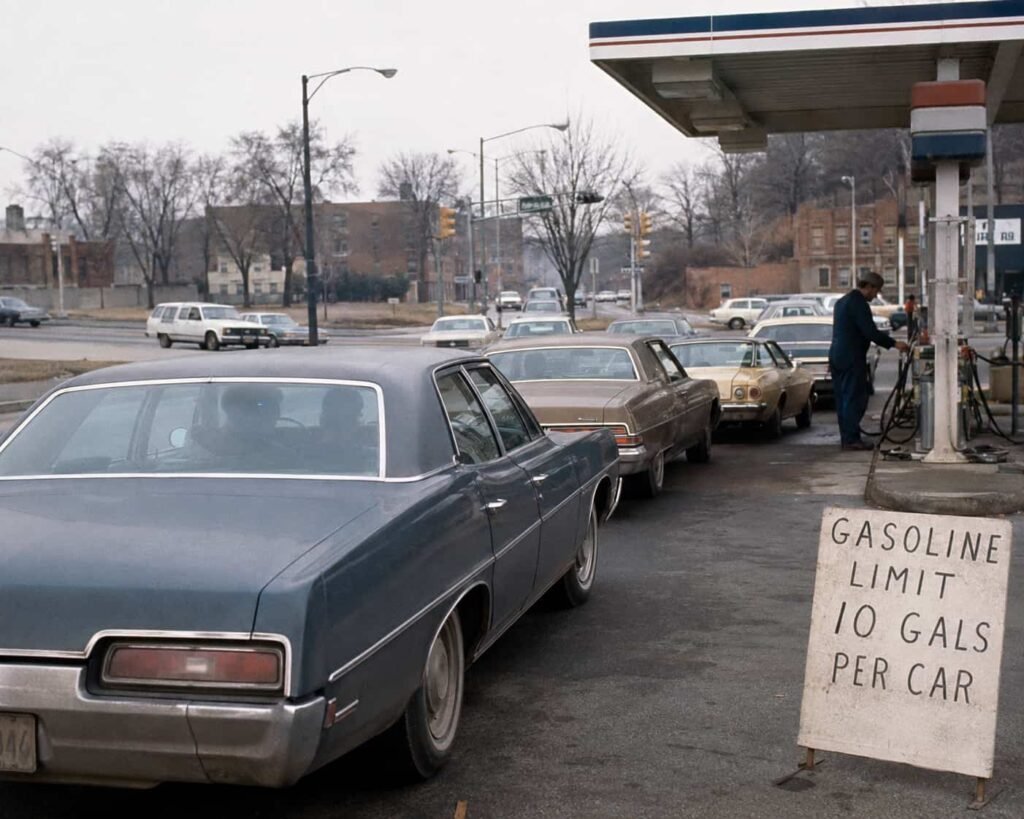
The average retail price of motor gasoline was about 36 cents per gallon in 1970. By 1979, the national average was approximately 86 cents per gallon.
The figures do not always compare exactly the same fuel grade because gasoline standards and available fuel types changed during the decade. They nevertheless show the sharp increase in what American drivers paid at the pump.
The increase was not smooth. The 1973 oil embargo led to shortages, long lines, restricted opening hours, and higher prices. A second major energy shock arrived near the end of the decade following disruption in Iran.
A price below one dollar may seem extremely low now, but motorists earned much smaller salaries and often drove large, less fuel-efficient cars. Filling the tank of an American sedan could take a noticeable part of a worker’s weekly pay.
Fuel costs also affected more than driving. Higher production and transportation expenses contributed to price increases for food and other products.
Going to the Movies Was Still an Affordable Night Out
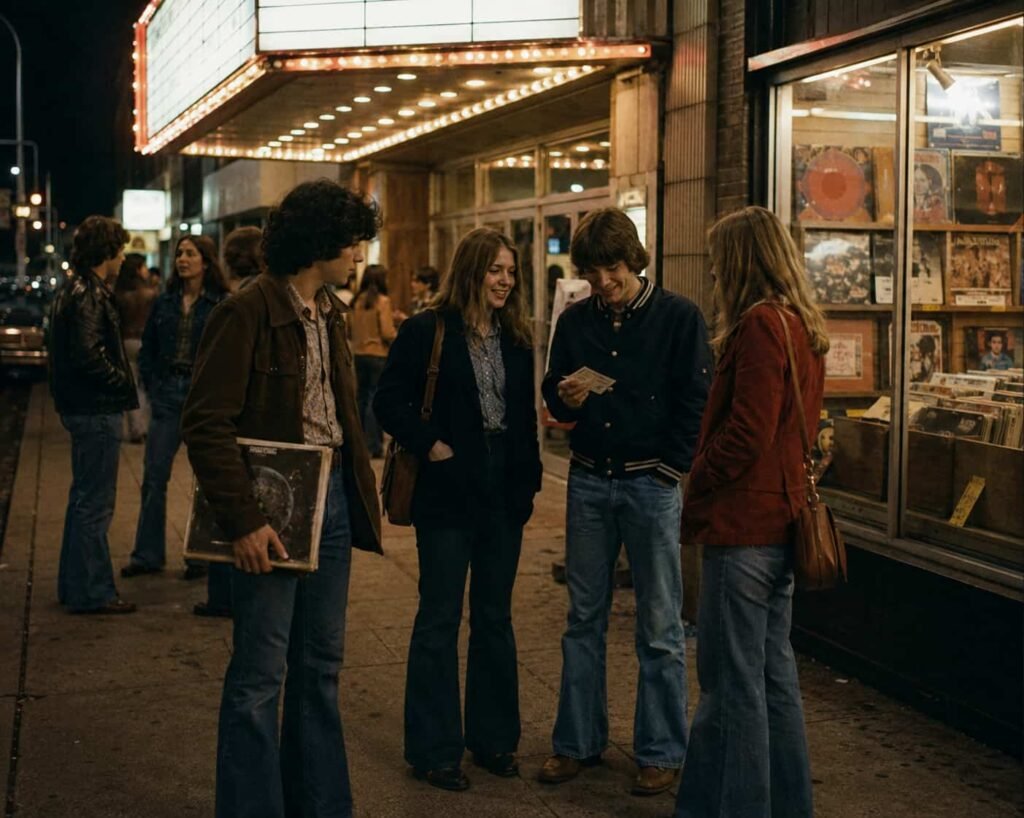
The average American movie ticket cost around $1.65 in 1971. By 1979, the average had reached $2.47.
A couple could therefore buy two tickets for less than five dollars near the end of the decade, before snacks and transportation were included.
Drive-in theaters remained popular, especially with families and teenagers. A visit could sometimes be cheaper than buying separate seats at an indoor cinema, depending on whether admission was charged per person or per car.
Records were another regular expense for music fans. A single was cheaper than a full album, while double albums and special packages cost more. Saving for a new release was often part of the experience, especially for teenagers relying on pocket money or a weekend job.
Even Sending a Letter Became More Expensive
At the beginning of 1970, a First-Class stamp cost six cents.
The price increased to eight cents in 1971, ten cents in 1974, thirteen cents at the end of 1975, and fifteen cents in 1978.
That progression neatly reflects the wider decade. A small everyday purchase that had cost six cents entered the 1980s at two and a half times that amount.
Letters were also far more important than they are now. People used the mail for personal correspondence, bills, catalog orders, photographs, greeting cards, competition entries, and communication with companies.
College Tuition Was Lower, but Not Free
Average tuition and required fees at a public four-year institution were approximately $394 for the 1970–71 academic year. By 1979–80, the figure had increased to $738.
When room and board were included, the average total for a public four-year institution rose from about $1,326 to $2,327. Private institutions cost considerably more.
Those totals appear remarkably low now, but students and their families were also working with much lower incomes.
A year of public four-year tuition equaled around 246 hours of work at the 1971 federal minimum wage of $1.60 for covered workers. In 1979, it still represented approximately 254 hours at the federal rate of $2.90.
Tuition had almost doubled, but the amount of minimum-wage work needed to cover the tuition figure remained relatively similar during the decade. This comparison does not include taxes, housing, books, food, or other living expenses.

Was Life Really Cheaper in the 1970s?
Many individual prices were undeniably lower. A stamp cost only a few cents, a cinema ticket was under three dollars, and an entry-level car could be purchased for less than $2,000.
That does not mean everything was easy to afford. Salaries were lower, household products generally offered fewer features, and inflation repeatedly reduced the value of pay increases.
Housing became noticeably more difficult to reach by the end of the decade. Entertainment and public college tuition, by comparison, remained relatively manageable when measured against wages.
The most accurate answer is that 1970s prices were low in nominal dollars, but affordability depended on what someone was buying, when during the decade they bought it, where they lived, and how much they earned.
