
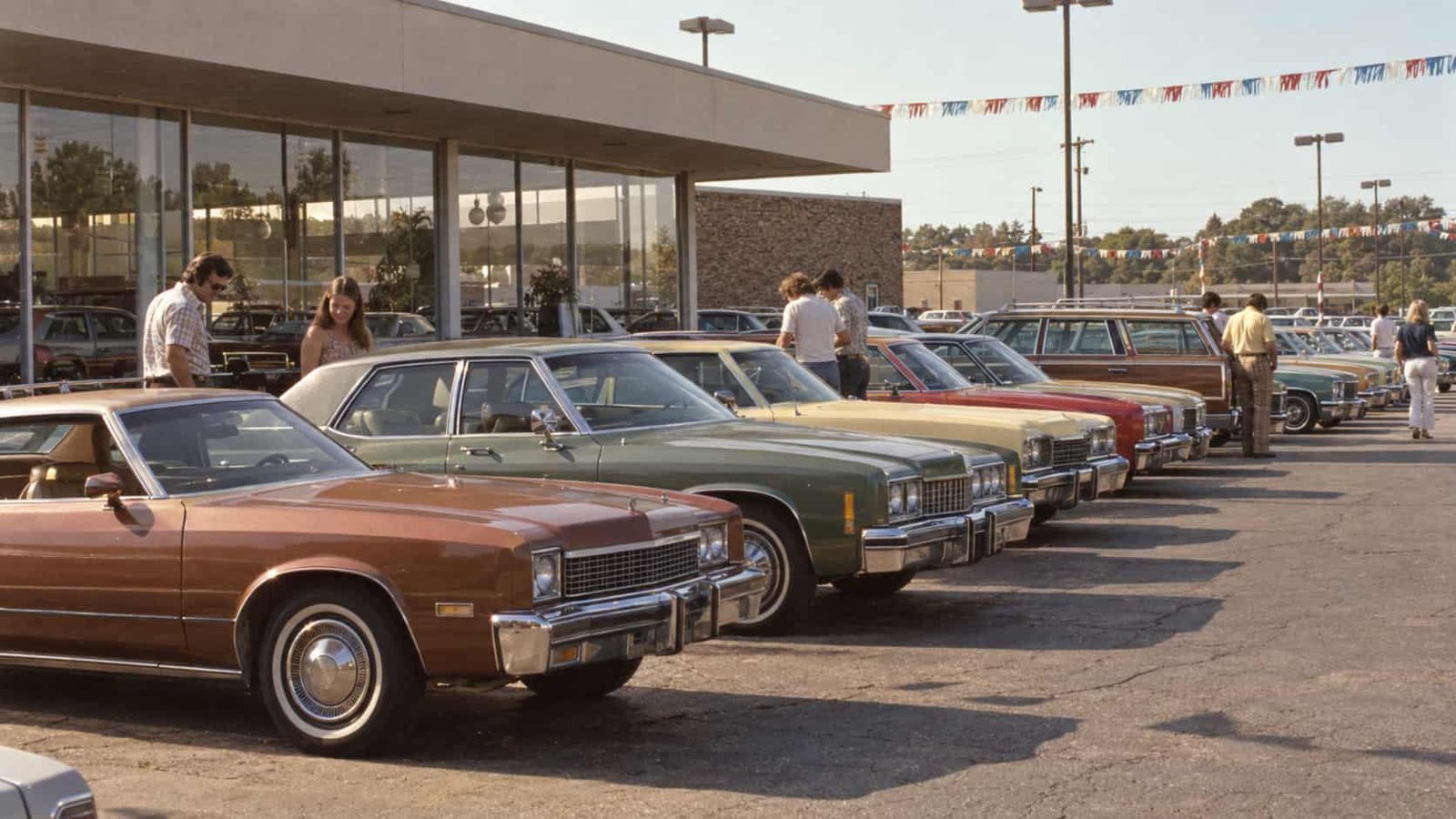
The average new car sold in America cost about $3,542 in 1970. By 1979, buyers were paying an average of $6,847.
That sounds like cars almost doubled in price during the seventies — and in ordinary dollars, they did.
But here’s the surprising part: once inflation is taken into account, the average new car wasn’t dramatically more expensive at the end of the decade than it had been at the beginning.
The sticker prices changed enormously. The cars changed too. And between the two sat an oil crisis, new emissions rules, smaller imports and an American car industry learning that bigger wasn’t always better.
Average new car price by year
Historical U.S. transportation data gives us the average price paid for a new car throughout the decade.
| Year | Average new car price |
|---|---|
| 1970 | $3,542 |
| 1971 | $3,742 |
| 1972 | $3,879 |
| 1973 | $4,052 |
| 1974 | $4,440 |
| 1975 | $4,950 |
| 1976 | $5,418 |
| 1977 | $5,814 |
| 1978 | $6,379 |
| 1979 | $6,847 |
Between 1970 and 1979, the average increased by about 93%.
Yet a buyer wasn’t shopping for an “average car.” Walk into a dealership and the range could be enormous.
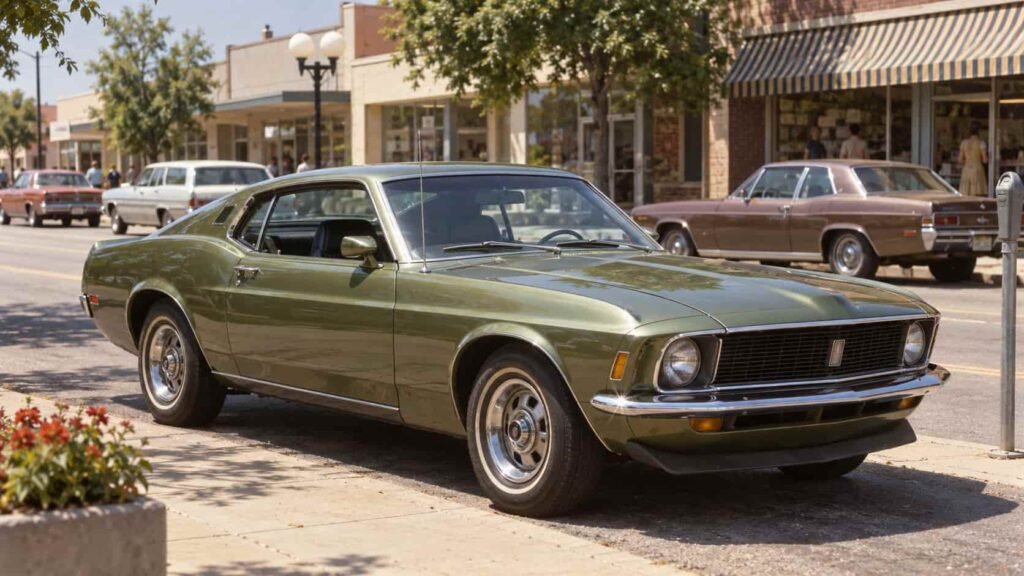
A Mustang for $2,721
Take the 1970 Ford Mustang.
A standard six-cylinder Mustang coupe carried a base price of about $2,721. The sportier Mach 1 started around $3,271.
Those are the kinds of numbers that make old car ads so entertaining today. But remember what the average American family earned at the time: around $9,870 a year.
A $2,721 Mustang therefore represented more than a quarter of a year’s median family income before taxes and living expenses.
Affordable compared with today’s sticker prices? Absolutely. An impulse purchase? Not exactly.
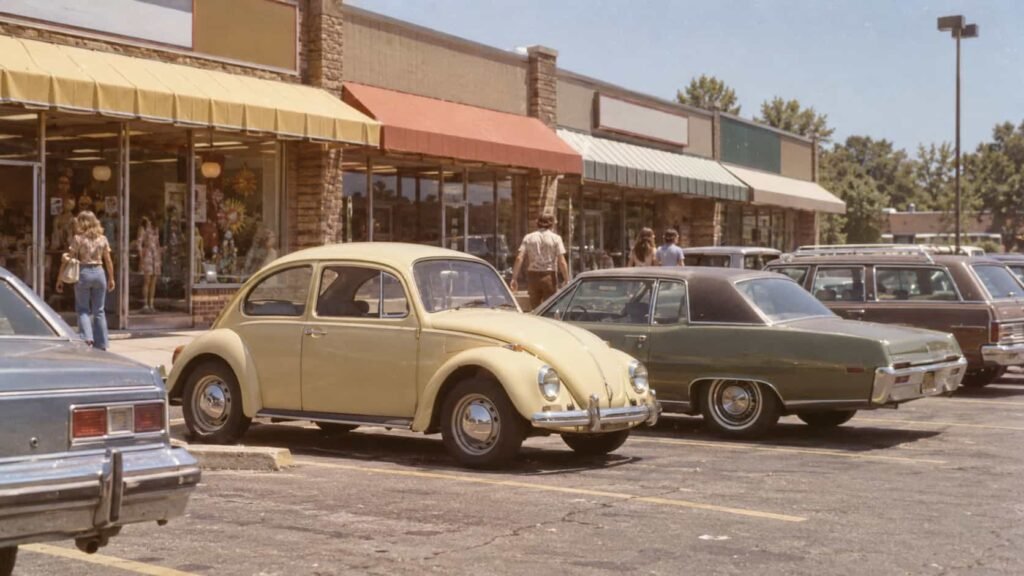
In 1975, a Beetle still came in under $3,000
The Volkswagen Beetle offers another useful snapshot.
In 1975, a basic Beetle Deluxe Sedan cost about $2,999, while the Super Beetle Sedan was around $3,295.
The average new car that year cost $4,950, putting the basic Beetle nearly $2,000 below the market average.
That difference helps explain the appeal of smaller imports. Buyers who didn’t need a large American sedan could spend significantly less.
By 1979, a Camaro could still start below the average
At the other end of the decade, Chevrolet’s Camaro gives us another familiar reference point.
A base six-cylinder 1979 Camaro Sport Coupe started at about $4,676. The Z28 started around $6,115.
The overall new-car average in 1979 was $6,847, so even the Z28 came in below that national figure before additional equipment entered the equation.
And options mattered. Engines, transmissions, air conditioning, upgraded interiors, wheels, radios and appearance packages could push an advertised base price considerably higher.
The really surprising comparison is inflation
Here’s where the numbers become much more revealing.
The same historical transportation dataset also expresses new-car prices in constant 1997 dollars.
| Year | Price at the time | Constant 1997 dollars |
|---|---|---|
| 1970 | $3,542 | $14,328 |
| 1975 | $4,950 | $14,751 |
| 1979 | $6,847 | $15,132 |
In ordinary dollars, the average car price rose 93% from 1970 to 1979.
In the dataset’s inflation-adjusted dollars, the increase between those same two points was only around 6%.
That’s a completely different way of looking at the decade.
A large part of the spectacular-looking increase on old window stickers wasn’t simply cars becoming more expensive. It was the dollar becoming less valuable.
Domestic cars and imports started far apart
There’s another interesting story hiding inside the averages.
In 1970, the average domestic new car cost about $3,708. The average imported car was only $2,648.
By 1979, that gap had almost disappeared.
| Year | Domestic | Import | Overall |
|---|---|---|---|
| 1970 | $3,708 | $2,648 | $3,542 |
| 1975 | $5,084 | $4,384 | $4,950 |
| 1979 | $6,889 | $6,704 | $6,847 |
The cheap-import story of the early seventies was becoming less clear-cut by the end of the decade.
At the same time, Japanese and European manufacturers were becoming increasingly important to American buyers, particularly as fuel economy received more attention.
Then the oil crisis changed the conversation
If you picture an American road in 1970, you’re still firmly in the age of big Detroit iron.
Large sedans, station wagons, personal luxury cars and the last great wave of the classic muscle-car era were everywhere.
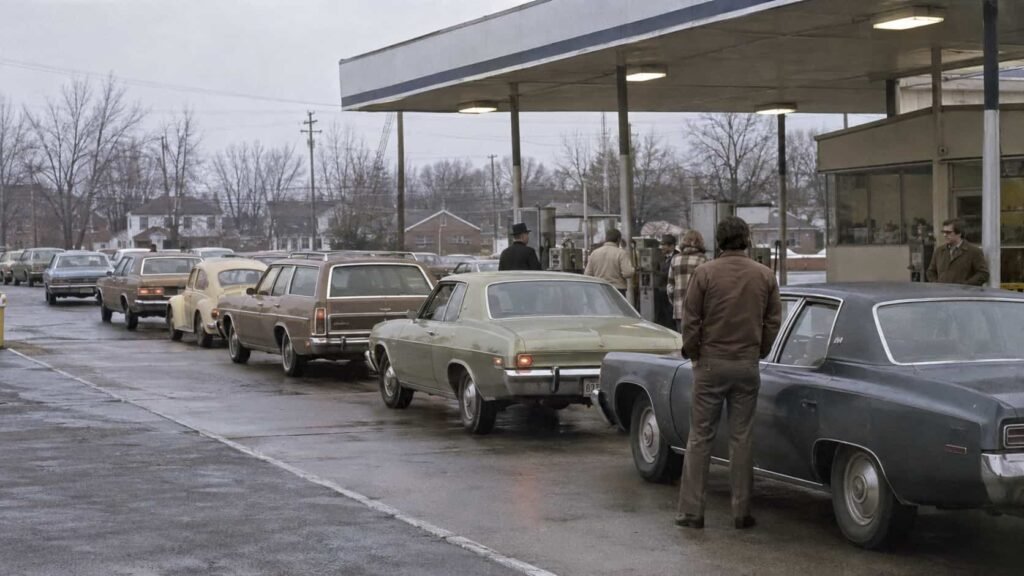
Then came the 1973 oil embargo.
Fuel suddenly mattered in a way many American drivers had not been accustomed to. Gasoline shortages, lines at filling stations and rising fuel costs turned miles per gallon into a much more urgent part of the buying decision.
It wasn’t an overnight switch from giant sedans to tiny economy cars, but the market was changing.
Manufacturers increasingly downsized cars during the second half of the decade, while compact imports offered an obvious alternative to the traditional American full-size formula.
The seventies car changed under the hood too
Price wasn’t the only difference between a car from 1970 and one from 1979.
Emissions requirements, fuel economy concerns and changing engine technology reshaped performance. Horsepower figures fell sharply on many models compared with the muscle-car peak, and manufacturers began finding different ways to balance size, power, emissions and economy.
That’s why the decade can feel like two automotive eras joined together.
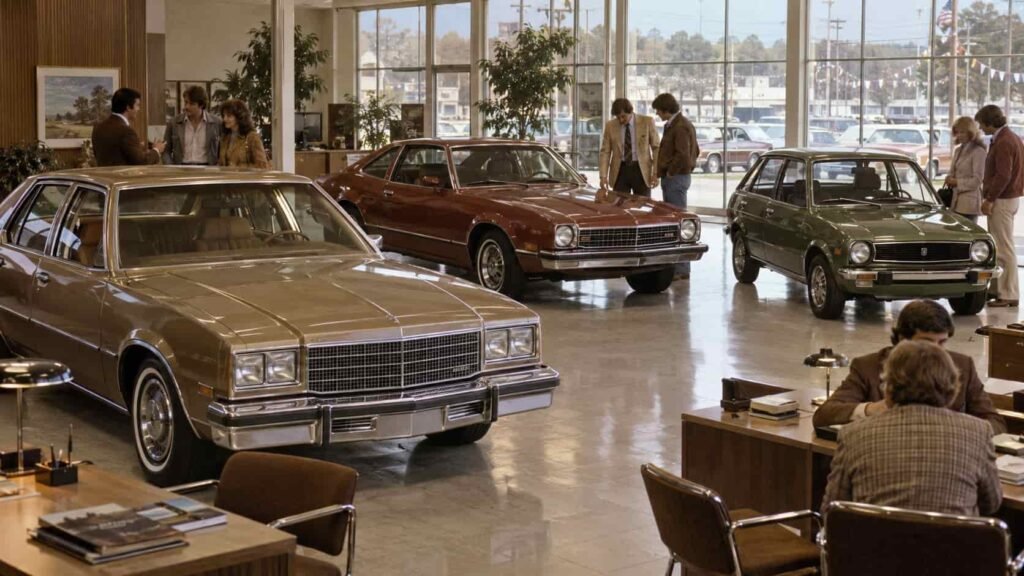
The early seventies still carried much of the attitude of the late sixties. By the end of the decade, downsizing, fuel economy and a growing import presence had changed what buyers saw in the showroom.
Were cars actually more affordable?
Comparing car prices with family income produces another surprise.
In 1970, the $3,542 average new car price was about 36% of median annual family income.
In 1979, the $6,847 average worked out to about 35% of median family income.
| 1970 | 1979 | |
|---|---|---|
| Average new car | $3,542 | $6,847 |
| Median family income | ≈ $9,870 | ≈ $19,680 |
| Car price / family income | ≈ 36% | ≈ 35% |
That’s not a complete affordability calculation. It doesn’t account for taxes, household expenses, financing terms, trade-ins or the fact that many families bought used rather than new.
But it does make one point very clearly: comparing a $3,500 seventies car directly with a modern sticker price can give the wrong impression.
Would you know the price without seeing the year?
A 1970 Mustang for $2,721 sounds cheap. A 1975 Beetle for $2,999 sounds cheap. Even a 1979 Camaro for less than $5,000 sounds almost absurd today.
But put those prices next to a television, refrigerator, house or week’s groceries from the same year and things get much harder.
So, how much did a car cost in the 1970s?
The average new car cost $3,542 in 1970, $4,950 in 1975 and $6,847 in 1979.
Individual cars could sit far above or below those numbers. A basic 1970 Mustang started at $2,721. A 1975 Beetle was $2,999. A 1979 Camaro started at $4,676.
But perhaps the best way to understand the decade isn’t to stare at those old sticker prices. It’s to remember what else was changing around them: wages, inflation, gasoline prices, the cars people wanted and even what Americans thought a car should be.
By 1979, the showroom still had plenty of chrome, V8s and vinyl. It just wasn’t quite the same showroom America had walked into nine years earlier.
