
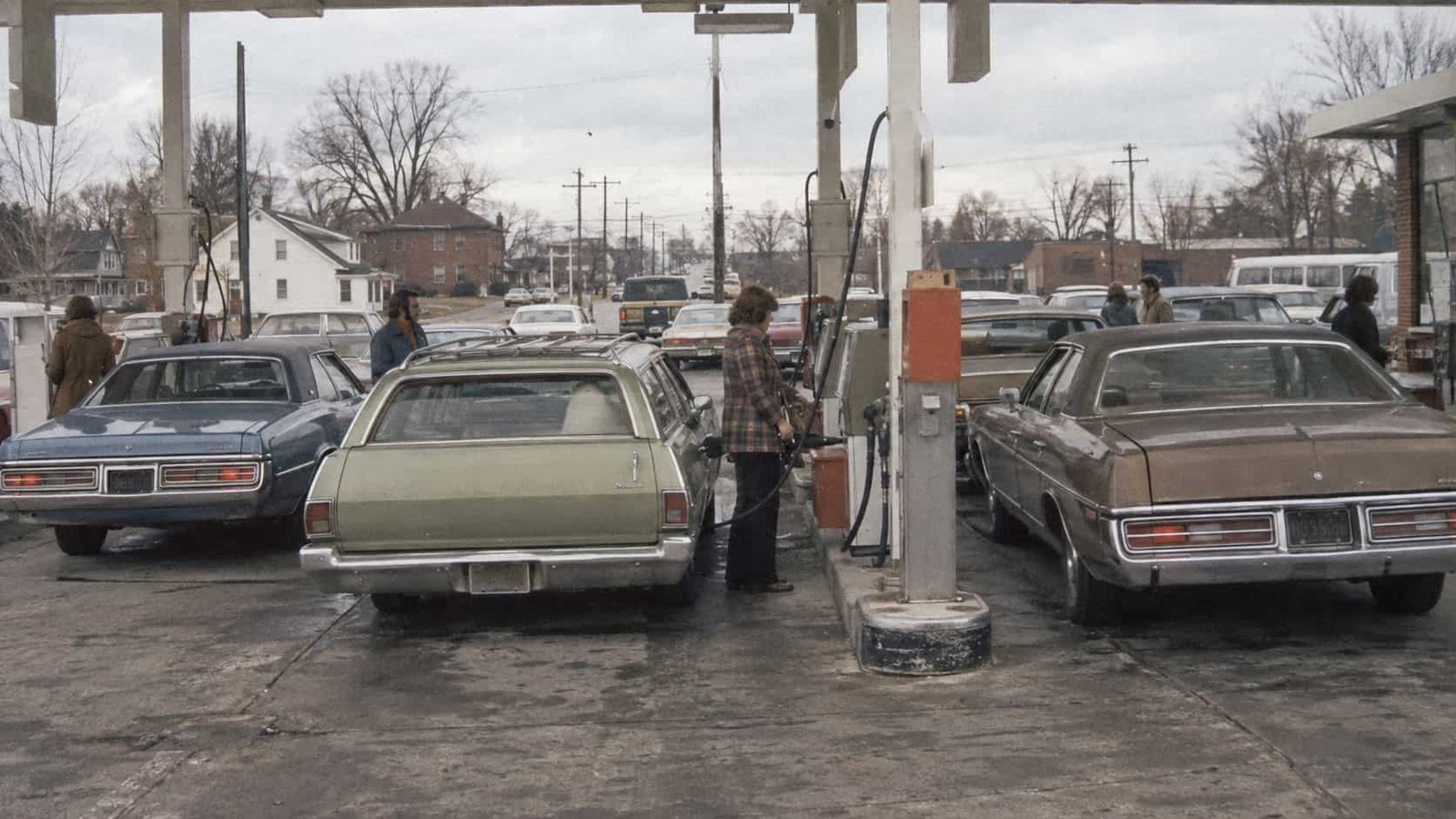
A gallon of regular gasoline cost an average of about 36 cents in 1970. By 1979, leaded regular averaged roughly 86 cents a gallon, while unleaded regular was just over 90 cents.
Those prices sound almost impossibly low today. But the seventies were the decade when Americans learned that cheap, plentiful gasoline could no longer be taken for granted.
Two energy shocks, long lines at filling stations and rapidly rising prices changed not only what drivers paid, but also the kinds of cars they wanted to own.
Gas prices in the 1970s, year by year
For a consistent comparison across the entire decade, the table below uses the U.S. average retail price of leaded regular gasoline.
| Year | Average price per gallon |
|---|---|
| 1970 | 35.7¢ |
| 1971 | 36.4¢ |
| 1972 | 36.1¢ |
| 1973 | 38.8¢ |
| 1974 | 53.2¢ |
| 1975 | 56.7¢ |
| 1976 | 59.0¢ |
| 1977 | 62.2¢ |
| 1978 | 62.7¢ |
| 1979 | 85.7¢ |
The contrast is striking. Gasoline barely moved in price between 1970 and 1972. Then the pattern broke.
By the end of the decade, leaded regular cost about 140% more than it had in 1970.
Before the oil crisis, gas really was around 36 cents
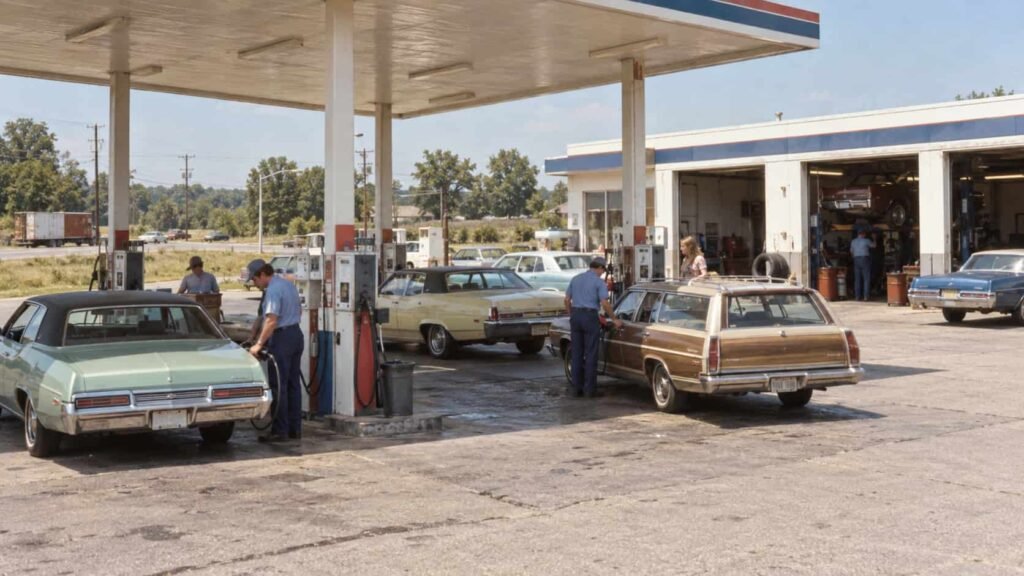
At the beginning of the seventies, the familiar image of inexpensive American gasoline was still largely accurate.
Regular gas averaged 35.7 cents in 1970, 36.4 cents in 1971 and actually slipped slightly to 36.1 cents in 1972.
For perspective, filling an imaginary 20-gallon tank at the 1970 average would cost about $7.14.
That still represented real money when the average American wage was only a little over $6,000 a year, but cheap fuel had helped make large sedans, station wagons and V8 engines an ordinary part of American life.
Then came the 1973 oil embargo
October 1973 changed the story.
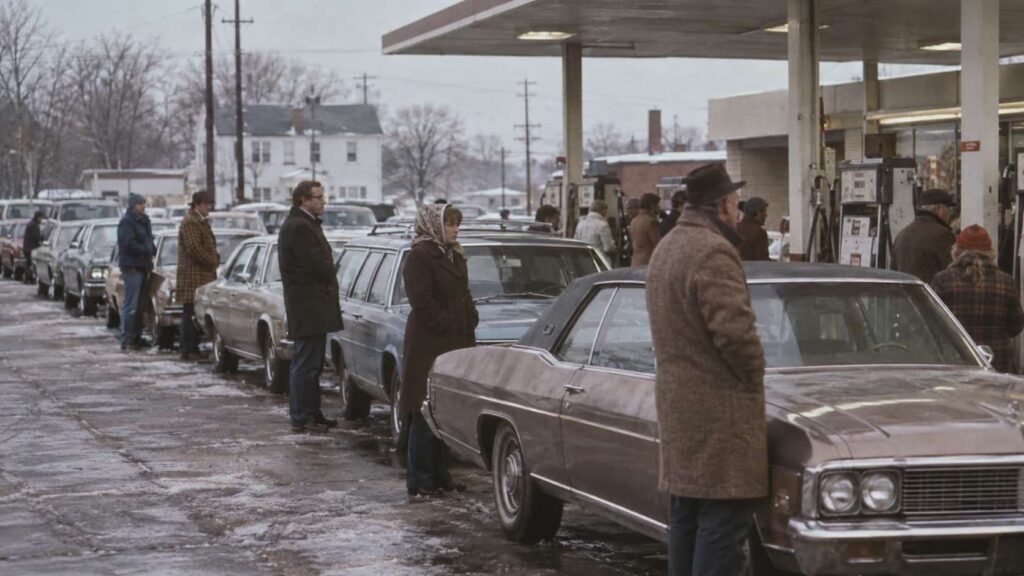
During the Arab-Israeli War, Arab oil-producing countries imposed an oil embargo against the United States and cut production. The effects took several weeks to reach American consumers, but by the winter of 1973–74, reduced supplies were becoming painfully visible.
Drivers encountered long lines at gas stations. Some stations limited how much fuel each customer could buy, while others simply ran out.
The annual average doesn’t fully show how sudden the change felt. Leaded regular averaged 38.8 cents in 1973, but 53.2 cents in 1974 — a jump of about 37% in one year.
The embargo ended in March 1974, but the era of thirty-something-cent gasoline was effectively over.
America started thinking about fuel economy
The crisis affected much more than the number on the gas pump.
A national 55 mph speed limit was introduced as part of efforts to conserve fuel. Energy independence became a major political issue, and fuel economy became increasingly important to car buyers and manufacturers.
That change can be seen in the cars themselves. The huge sedans and muscle cars associated with the beginning of the decade increasingly shared American roads with smaller domestic models and fuel-efficient imports.
Our guide to car prices in the 1970s looks more closely at how the showroom changed during the same years.
Gas prices settled down — briefly
After the first energy crisis, prices continued upward but much more gradually.
Leaded regular averaged 56.7 cents in 1975, 59 cents in 1976 and 62.2 cents in 1977. In 1978 it was still only slightly higher at 62.7 cents.
Unleaded gasoline was becoming increasingly common as newer cars were designed for catalytic converters. EIA data puts regular unleaded at about 61.4 cents in 1976 and 67 cents in 1978.
1979 brought the lines back
Then the decade delivered another shock.
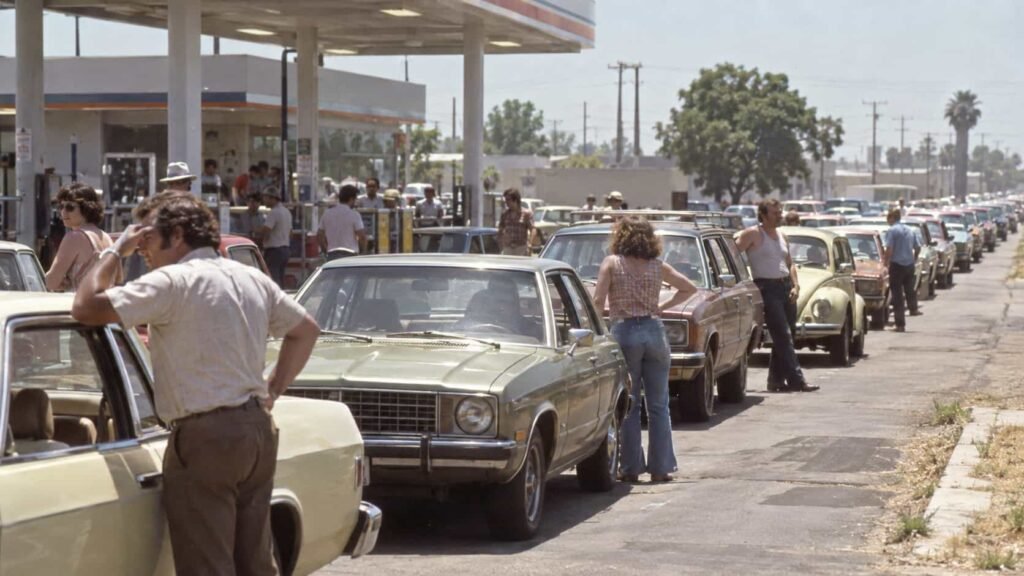
The Iranian Revolution disrupted oil production at the end of 1978 and into 1979. Although the loss represented only part of world supply, an already tight oil market reacted sharply.
Gasoline lines returned in parts of the United States during the spring and summer. Prices climbed rapidly as well.
Leaded regular averaged 85.7 cents a gallon in 1979. Regular unleaded averaged about 90.3 cents. By September, Bureau of Labor Statistics data shows regular unleaded averaging more than $1 per gallon in U.S. cities.
Using our same 20-gallon example, a fill-up at the 1979 leaded-regular average would cost about $17.14 — more than twice the 1970 amount.
Could you guess a seventies gas price?
Thirty-six cents sounds obvious once you know the answer. Put it beside the price of a hamburger, television, new car or week’s groceries from the same year, though, and seventies money becomes surprisingly difficult to judge.
So, how much was gas in the 1970s?
Regular gasoline started the decade at about 36 cents a gallon. After the first oil crisis, it jumped above 50 cents. By 1979, leaded regular averaged about 86 cents and regular unleaded about 90 cents per gallon.
The numbers matter, but the gas lines are what made the decade memorable. For millions of American drivers, the seventies were when the filling station stopped being an afterthought and became part of a much bigger story about inflation, oil and the future of the American car.
