
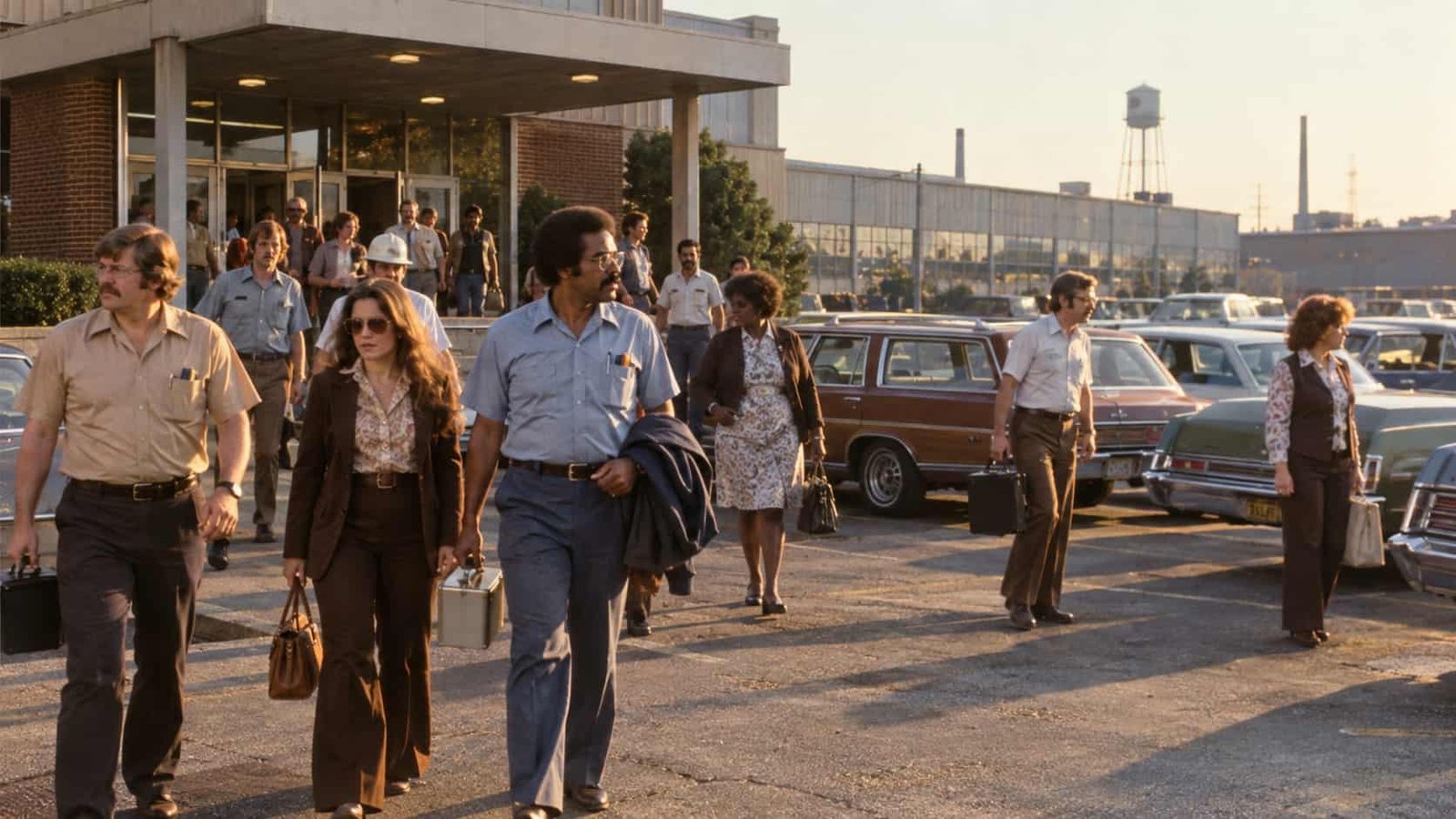
In 1970, the U.S. national average wage was about $6,186 a year. By 1979, it had climbed to $11,479. A full-time worker’s typical weekly paycheck also rose sharply, from around $130 in 1970 to $244 in 1979.
Those numbers can look tiny today. Six thousand dollars for an entire year’s work? Less than $250 for a full week?
But seventies wages only make sense beside seventies prices. A new car averaged $3,542 in 1970. The median new house sold for $23,400. And as the decade went on, both wages and prices began climbing at a pace that Americans could see in almost every paycheck and every trip to the store.
So how much did people actually earn in the 1970s — and what could those wages buy?
What was the average salary in the 1970s?
There isn’t one perfect number for an “average salary” in the seventies.
Some Americans were salaried. Others were paid by the hour. Some worked only part of the year, while others worked full-time year-round. A family could have one income or two. Government statistics therefore measured wages and income in several different ways.
One of the most useful consistent benchmarks is the Social Security Administration’s National Average Wage Index. It gives us a year-by-year picture of how average U.S. wages changed.
| Year | Average wage | Monthly equivalent |
|---|---|---|
| 1970 | $6,186 | ≈ $516 |
| 1971 | $6,497 | ≈ $541 |
| 1972 | $7,134 | ≈ $594 |
| 1973 | $7,580 | ≈ $632 |
| 1974 | $8,031 | ≈ $669 |
| 1975 | $8,631 | ≈ $719 |
| 1976 | $9,226 | ≈ $769 |
| 1977 | $9,779 | ≈ $815 |
| 1978 | $10,556 | ≈ $880 |
| 1979 | $11,479 | ≈ $957 |
On paper, average wages rose by roughly 86% between 1970 and 1979.
That sounds like an extraordinary pay rise. Unfortunately for workers, prices were climbing too.
What did a weekly paycheck look like?
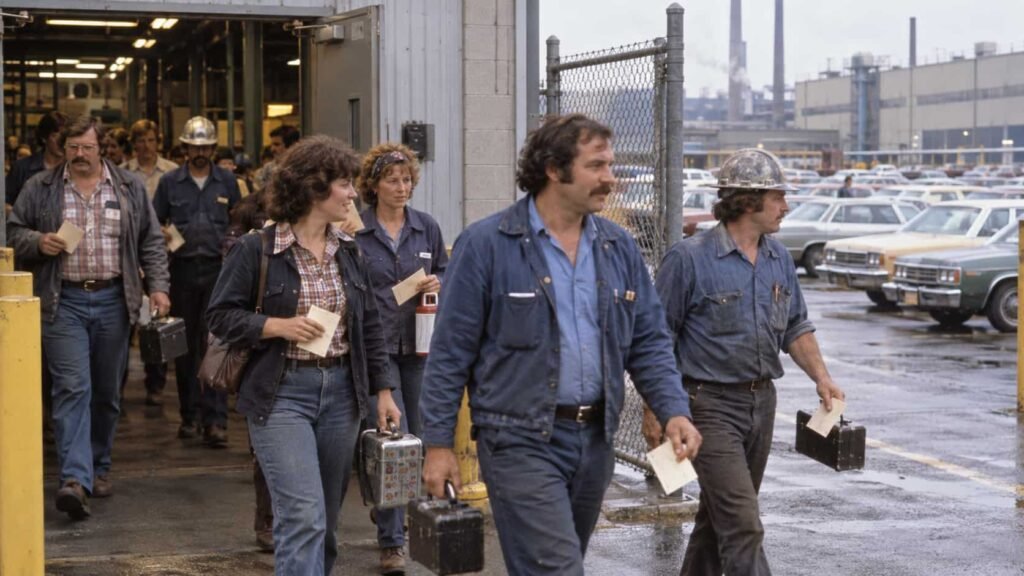
Annual numbers can feel abstract, so weekly earnings give us a better sense of what payday actually looked like.
In 1970, the median weekly earnings of a full-time wage or salary worker were about $130.
By 1975, that figure had reached roughly $185. In 1978 it was $226, and the 1979 annual average was about $244 a week.

| Year | Median weekly earnings |
|---|---|
| 1970 | $130 |
| 1975 | $185 |
| 1977 | $211 |
| 1978 | $226 |
| 1979 | $244 |
Imagine getting a paycheck for $130 after a full week of work in 1970. It feels astonishingly small now, but the prices waiting outside the workplace were very different too.
What did different jobs pay?
Of course, an average wage says very little about what an individual person actually brought home.
Occupation mattered enormously.
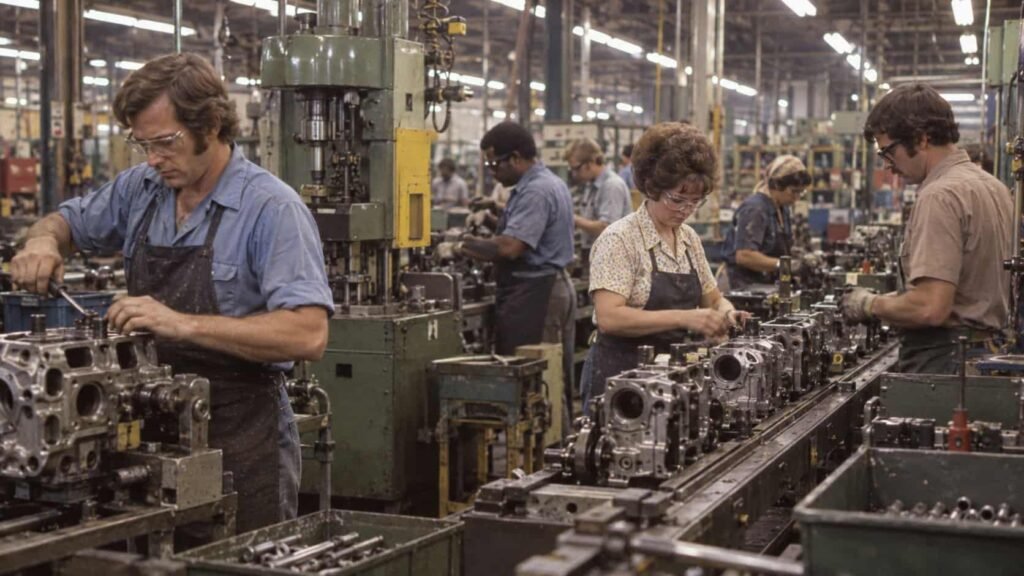
The 1970 Census recorded earnings from the previous year for people who had worked year-round. Among men, professional and technical workers had median earnings of about $11,752, while managers and administrators were almost identical at $11,747.
Other broad occupational groups earned less:
| Occupation group | Median annual earnings |
|---|---|
| Professional & technical workers | $11,752 |
| Managers & administrators | $11,747 |
| Sales workers | $9,454 |
| Craftsmen & skilled trades | $8,730 |
| Clerical workers | $7,973 |
| Transport equipment operators | $7,583 |
| Other operatives | $7,439 |
| Service workers | $6,381 |
| Non-farm laborers | $6,135 |
The differences were substantial. A professional worker could earn close to twice as much as someone in a service occupation, even before differences in overtime, benefits and location were taken into account.
An office job didn’t necessarily mean a huge salary
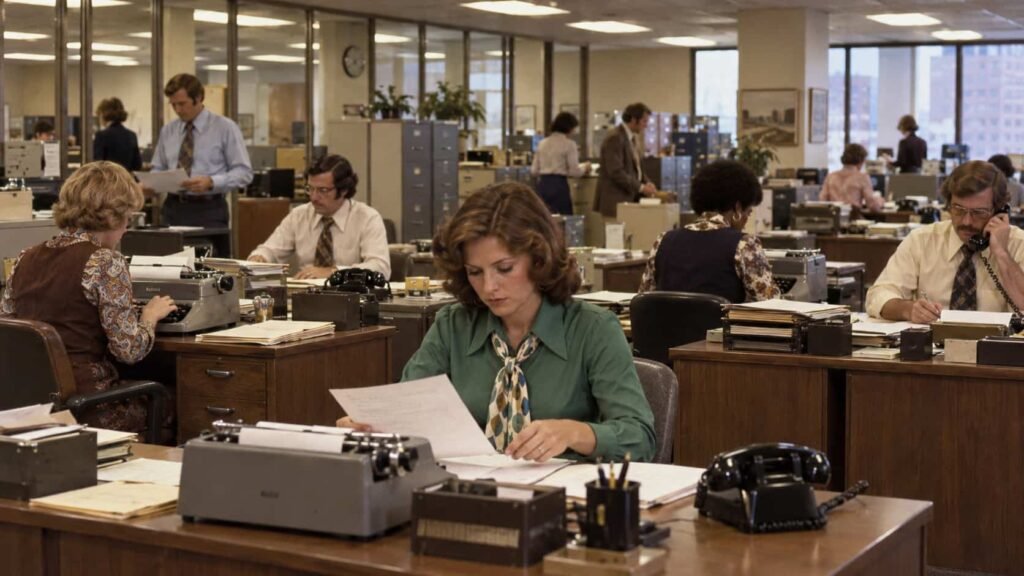
The stereotypical seventies office — typewriters, rotary phones, overflowing filing cabinets and plenty of cigarette smoke — was also a workplace where relatively modest dollar amounts could make up a normal wage.
A 1970 federal study of private nonfarm employers found that pay for working time averaged about $4.68 an hour for office employees. For nonoffice workers, the equivalent figure was about $3.21 an hour.
Benefits already mattered too. Employers were spending money on retirement plans, paid leave, health insurance and other compensation beyond the amount printed on the paycheck.
In other words, the modern distinction between salary and total compensation was already very real.
Men and women were not earning the same amount
Any picture of seventies wages also has to include one of the largest differences in the labor market: the gap between men’s and women’s earnings.
For year-round, full-time workers, Census statistics put median income in 1970 at about $9,184 for men and $5,440 for women.
Five years later, the figures had risen to $13,144 for men and $7,719 for women.

| Year | Men | Women | Women as % of men |
|---|---|---|---|
| 1970 | $9,184 | $5,440 | ≈ 59% |
| 1975 | $13,144 | $7,719 | ≈ 59% |
| 1977 | $15,070 | $8,814 | ≈ 58% |
The gap did not simply disappear as more women entered and remained in the workforce. In 1977, women working year-round full-time earned a little under three-fifths of the comparable male figure.
Occupational patterns, work experience and other factors differed between groups, but the disparity remained striking even in historical Census reports from the period.
A family income was different from one person’s salary
This distinction is especially important when looking at old advertisements.
A family might have more than one earner, so family income was typically higher than the wage of one individual worker.
In 1970, median U.S. family income was about $9,870. By 1979 it had reached roughly $19,660 to $19,680, depending on the Census release and survey revision used.
Household income was lower: about $8,730 in 1970 and $16,530 in 1979.
That’s why statements such as “the average American made $10,000 in 1970” can be misleading. They may be mixing together an individual wage, a full-time worker’s earnings, household income and family income — four different things.
So were Americans getting richer?
In nominal dollars, absolutely.
The Social Security average wage climbed from $6,186 in 1970 to $11,479 in 1979. Median family income roughly doubled. Weekly paychecks grew substantially.
But the seventies were also an inflationary decade.
In 1970, Census researchers noted that median family income had risen about 4.6% from the previous year while consumer prices had risen around 5.9%. After accounting for those higher prices, there was essentially no improvement in real median family income.
The same problem was even more obvious at the end of the decade.
Median family income increased by roughly 11% from 1978 to 1979. Consumer prices rose by about 11.3%. Once inflation was taken into account, the Census Bureau found no significant increase in real median family income.
Your paycheck was getting bigger. Unfortunately, so were many of the bills waiting for it.
What could a 1970 salary actually buy?
Here’s where those wages become easier to picture.
The Social Security average wage in 1970 was $6,186. That same year:
- a new car averaged about $3,542;
- a newly built home had a median selling price of $23,400;
- and a $100 purchase represented considerably more than it does now.
A new car therefore represented well over half of that annual average-wage benchmark. A median new home cost nearly four times as much.
By 1979, the average wage had reached $11,479, but the average new car was $6,847 and the median new-home price had shot up to $62,900.
It’s one reason the old prices in newspaper ads can be deceptive. The numbers were smaller, but so was the paycheck used to pay them.
For a closer look at those comparisons, see our guides to car prices in the 1970s and house prices in the 1970s.
The paycheck changed fast during the second half of the decade
The speed of the increase is perhaps the easiest thing to underestimate.
The national average wage passed $8,000 in 1974, $9,000 in 1976 and $10,000 in 1978. Just one year later, it was approaching $11,500.
Someone earning the same nominal salary for several years could therefore watch their purchasing power deteriorate quickly.
That made annual raises more than a pleasant bonus. During periods of high inflation, a worker could get a noticeable raise and still feel as though life had become no easier to afford.
Would you know what a week’s wages could buy?
Take that $130 median weekly paycheck from 1970 and try spending it in a seventies store.
How much would you expect to have left after groceries? Could it cover a television? What about a new refrigerator? How many weekly paychecks would it take to buy a car?
Once wages enter the equation, guessing old prices becomes a lot more difficult.
So, how much did people earn in the 1970s?
If you want a simple benchmark, the U.S. national average wage was about $6,186 in 1970, $8,631 in 1975 and $11,479 in 1979.
A typical full-time weekly wage gives another useful picture: around $130 a week in 1970, $185 in 1975 and roughly $244 by 1979.
But there was never one typical seventies paycheck. Your occupation, sex, age, location, hours and whether you worked year-round could change the answer enormously.
And that is what makes the numbers interesting. Wages nearly doubled on paper during the decade, yet many Americans watched houses, cars, gasoline and everyday expenses race upward alongside them.
A $200 weekly paycheck might have looked much healthier than $130 had nine years earlier. By 1979, however, it also had a lot more expensive things to pay for.
