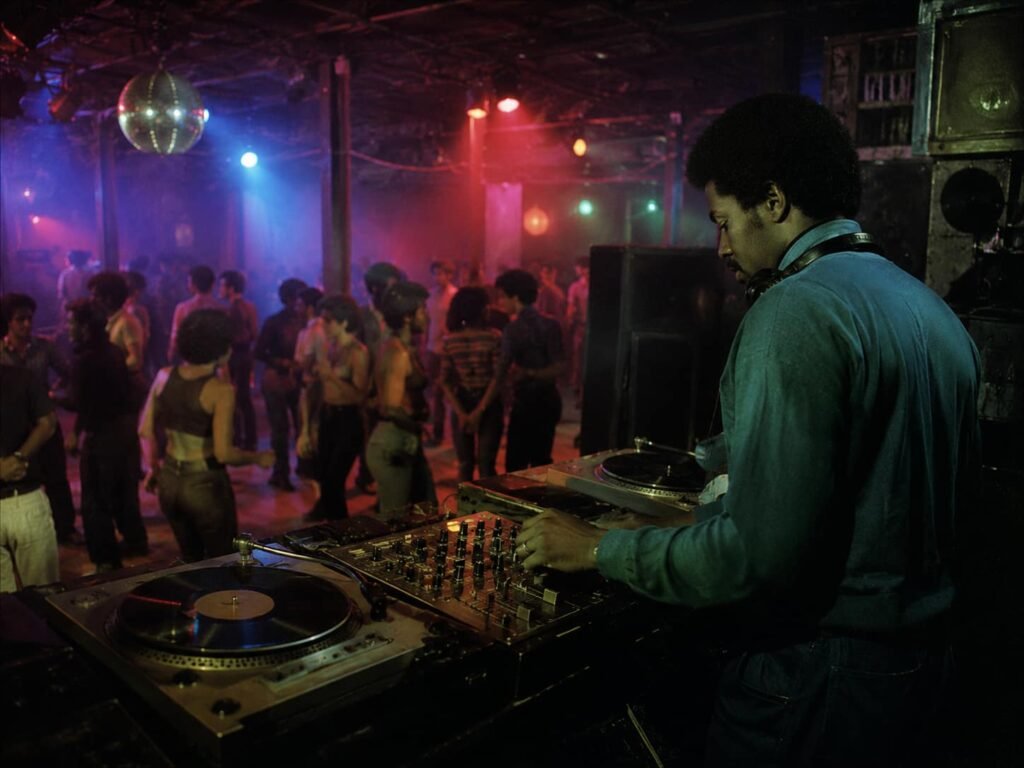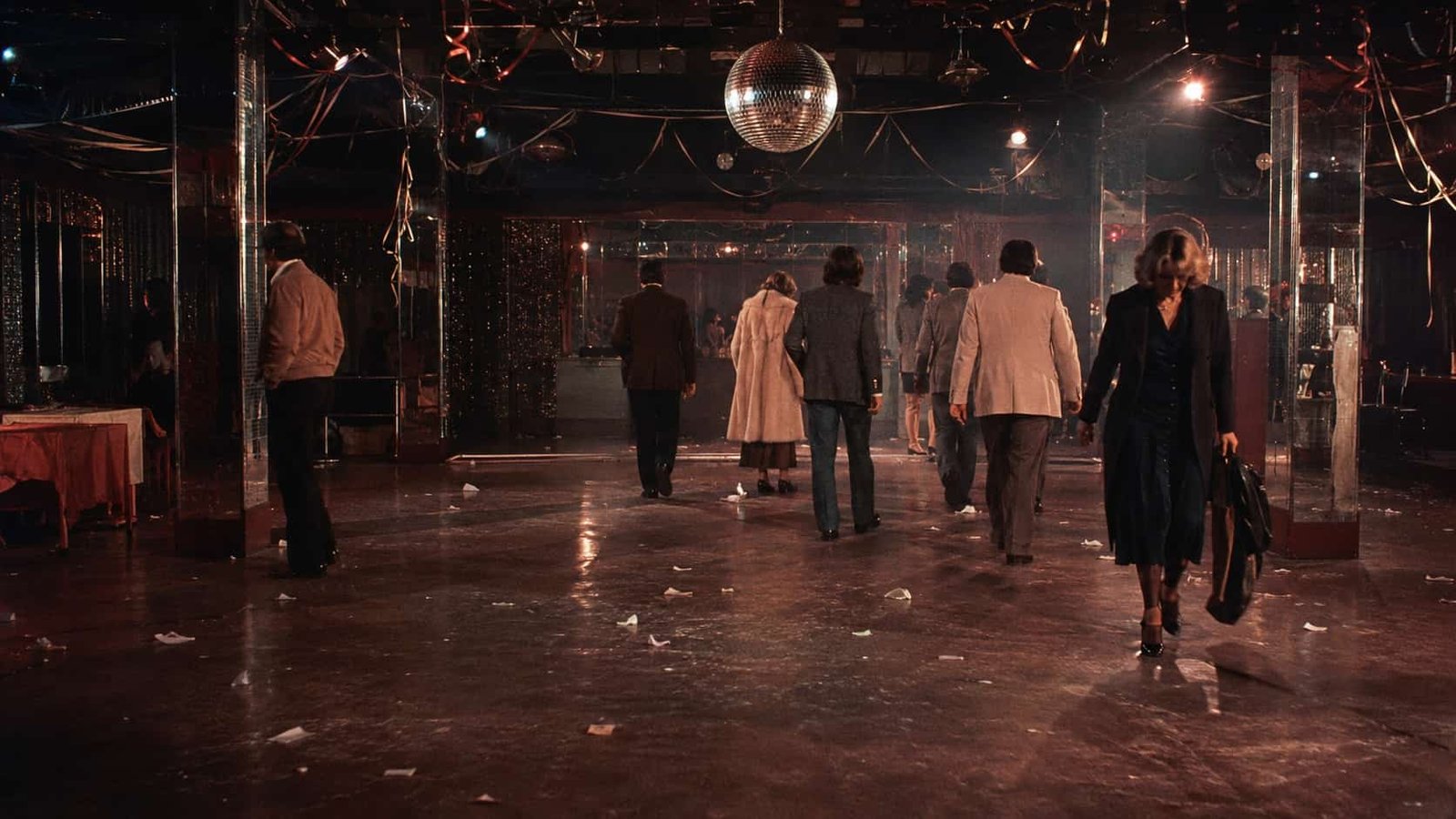
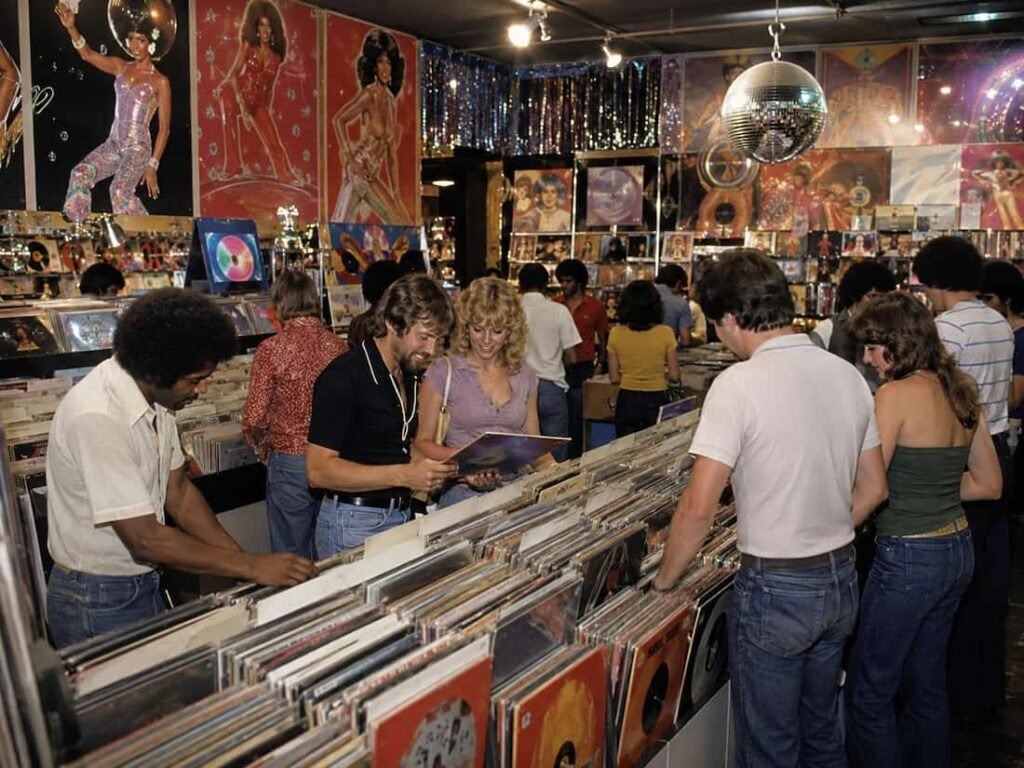
For a few years in the late 1970s, disco seemed impossible to escape. It filled nightclubs, radio schedules, record shops, television shows, and movie theaters. Rock stars recorded disco songs, fashion followed the clubs, and record companies searched for anything with a danceable beat.
Then the mood changed remarkably quickly.
By the beginning of the 1980s, radio stations were dropping disco, record labels were avoiding the word, and many former disco artists struggled to get new releases heard. The usual explanation is that the public simply became tired of it. That was certainly part of the story, but disco’s decline also involved overexposure, changing business decisions, a loud anti-disco campaign, and a cultural backlash against the people and places associated with the music.
Disco Began Far Away From the Mainstream
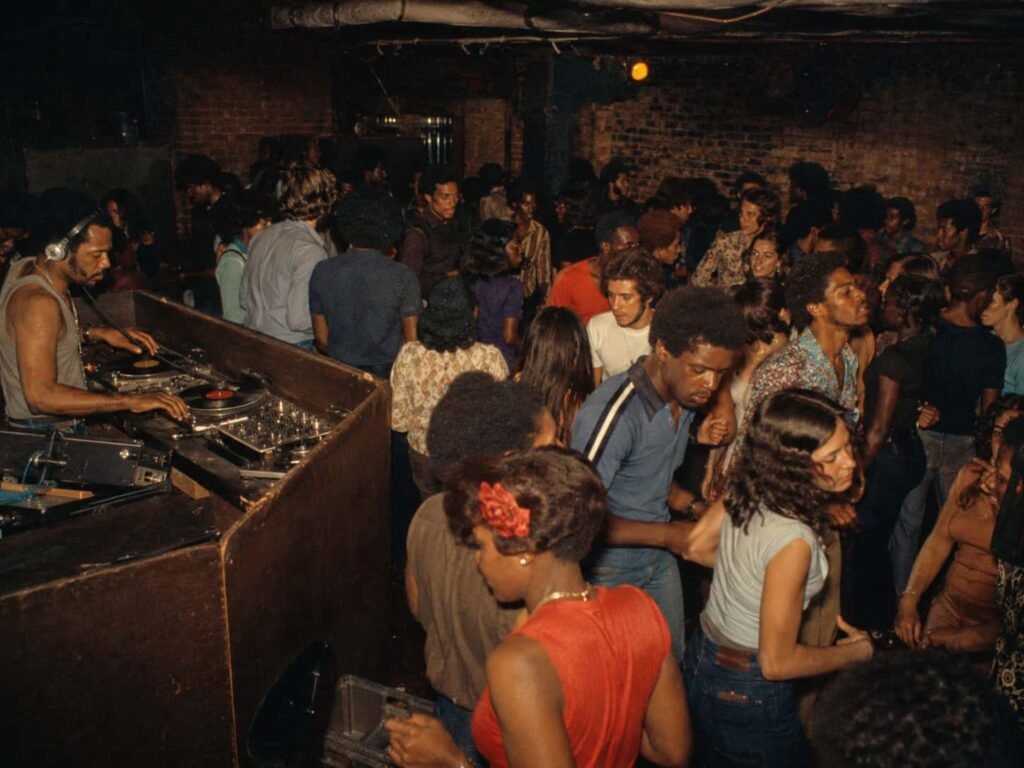
Before disco became a commercial craze, it grew inside underground clubs in New York and other American cities. Many of those spaces served Black, Latino, and LGBTQ communities that were not always welcomed in conventional nightlife.
The emphasis was not on watching a band perform. DJs used records to keep people dancing, blending songs together and extending the most rhythmic sections. The dance floor, rather than the stage, became the center of attention.
This early club scene was diverse, experimental, and relatively separate from mainstream radio. The word “disco” was not yet attached to every danceable record being released. It described a nightlife culture as much as a particular sound.
Saturday Night Fever Changed Everything
Disco had already produced major hits before 1977, but Saturday Night Fever introduced a polished version of the culture to a much wider audience. The film, its clothing, and its soundtrack helped turn disco from a nightclub movement into an international commercial phenomenon.
Suddenly, people who had never visited an underground club were buying disco records and learning dance routines. New discos opened far beyond New York, while existing bars and clubs changed their music to take advantage of the trend.
The record industry responded quickly. Artists who had little connection to the original club scene began releasing disco-influenced songs. Established rock and pop performers adopted dance rhythms, while producers added strings, pulsing bass lines, and steady beats to almost anything that might reach the charts.
The success was enormous, but it also changed what the public understood disco to be. A scene that had developed gradually in smaller communities was repackaged as a mass-market lifestyle.
There Was Simply Too Much of It
By 1978 and 1979, disco had become a convenient label that companies could place on records, television specials, clothes, dance lessons, and promotional products.
The problem was not that every disco record was bad. Many of the period’s best dance records were being produced at this time. The problem was that record companies began copying the surface of the music without understanding what made it work in clubs.
Songs were rushed out because they contained a fashionable beat. Novelty records appeared. Television personalities, actors, and artists from unrelated genres attempted disco releases. Radio stations changed formats after seeing competitors attract large audiences with dance music.
For listeners who preferred rock, punk, country, or singer-songwriters, it could feel as though one style was pushing everything else aside. Even people who enjoyed disco could become tired of the relentless marketing around it.
The industry had expanded the trend so quickly that a correction was almost inevitable.
“Disco Sucks” Became a Movement
The reaction was particularly strong among some rock listeners. “Disco sucks” appeared on T-shirts, signs, radio promotions, and bumper stickers. What began as a complaint about overplayed music became a public identity for people who wanted rock radio to fight back.
Chicago radio presenter Steve Dahl became one of the most visible voices in the campaign. He had lost a job when his former station changed from rock to disco and later built part of his new radio persona around mocking the genre.
Anti-disco promotions gave rock stations an effective way to attract young male listeners. The campaign offered its audience a clear enemy and made the conflict feel larger than an ordinary change in musical taste. The Chicago History Museum describes the anti-disco movement in part as a marketing strategy used by rock radio to strengthen its audience.
The Night Disco Was Supposedly Destroyed
The hostility reached its most famous moment on July 12, 1979, at Comiskey Park in Chicago.
The Chicago White Sox and Dahl organized a promotion during a baseball doubleheader. Anyone who brought a disco record could enter for 98 cents. The collected records were supposed to be destroyed in an explosion on the field between the two games.
Organizers expected around 20,000 spectators. Official attendance reached nearly 48,000, while estimates suggest that more than 50,000 people entered the stadium and thousands more remained outside.
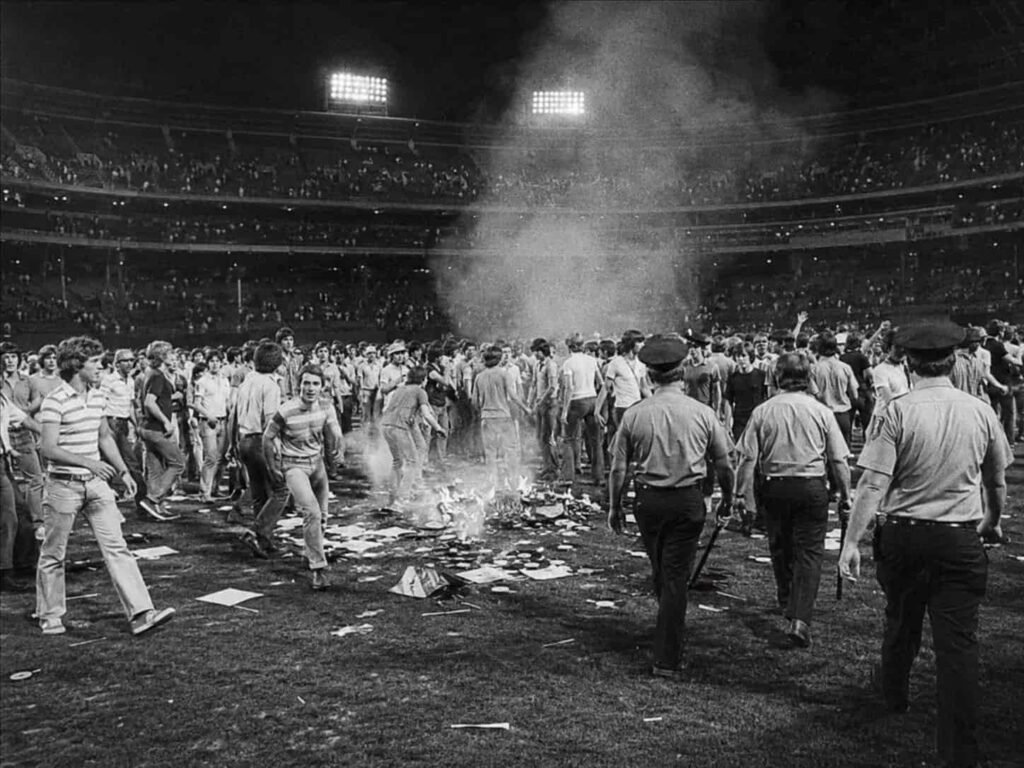
The crowd became disruptive during the first game, throwing records and other objects onto the field. After the planned explosion, thousands of people rushed onto the playing area. Fires were started, the field was damaged, and riot police were eventually brought in. The second game could not be played and was forfeited by the White Sox.
Disco Demolition Night did not single-handedly end disco. The genre was already showing signs of commercial decline. But the event gave the backlash a powerful image: a stadium filled with people cheering while dance records were destroyed.
It Was Not Only About the Music
People involved in the anti-disco movement have argued that they were reacting to bad music, overexposure, nightclub elitism, or the fear that rock was being pushed off the radio.
Those explanations cannot simply be dismissed. Disco really had been overmarketed, and some fashionable clubs became known for strict door policies and celebrity excess.
At the same time, the movement carried uncomfortable social undertones. Disco had emerged from Black, Latino, and queer nightlife, and many of its most visible stars were women, people of color, or performers who challenged traditional ideas about sexuality and masculinity.
At Comiskey Park, staff reportedly saw funk and R&B records among the albums brought in for destruction, even though those records were not necessarily disco. The crowd was largely made up of young white rock fans, while the music being rejected was closely connected to communities that were gaining greater visibility in popular culture.
Historians still debate how much racism and homophobia motivated individual participants. It would be too simple to claim that everyone who disliked disco shared the same prejudice. It would be equally misleading to pretend that the backlash occurred without any connection to the cultural tensions surrounding the music.
Record Companies Abandoned the Label
The music business often moves in extremes. Companies had spent heavily on disco when it appeared endlessly profitable. Once sales began weakening and public opinion turned, they retreated just as quickly.
Radio stations switched formats. Labels reduced their investment in dance acts, and some artists suddenly found themselves treated as outdated. The word “disco” became commercially dangerous, even when audiences still enjoyed music built around the same rhythms.
This made the decline appear more complete than it really was. Music that might have been marketed as disco in 1978 was increasingly described as dance music, club music, post-disco, or simply pop.
The familiar orchestral sound became less common, while drum machines, synthesizers, electronic bass lines, and leaner production began taking its place.
Disco Did Not Really Disappear
Outside mainstream American radio, people continued dancing to disco records. Clubs did not suddenly empty, DJs did not stop mixing music, and producers did not abandon the steady rhythm that had worked so well on dance floors.
Instead, the sound moved in several directions.
In Chicago, club DJs and producers helped turn disco into early house music. In New York, post-disco, electro, hip-hop, and garage scenes borrowed its rhythms and production techniques. European artists continued making electronic dance records without experiencing exactly the same anti-disco reaction found in the United States.
Pop music also kept many of disco’s basic ideas: a steady beat, prominent bass, extended mixes, club-focused production, and songs designed as much for dancing as for listening.
So why did disco die? As a heavily marketed American craze, it collapsed under its own weight and became the target of a highly visible backlash. As a musical idea, it never went away. The record industry stopped calling it disco, but the dance floor carried on.