Before smartphones, online invitations and perfectly staged social media photos, the Fourth of July had a much simpler rhythm. In the 1970s, Independence Day often meant folding lawn chairs, paper plates stacked high with hot dogs, kids running barefoot through the grass, and the smell of charcoal drifting across the neighborhood.
It was a holiday that felt big and local at the same time. There were flags on porches, parades on Main Street, radios playing from open windows, and fireworks that seemed to echo long after bedtime. For many Americans, the Fourth of July in the 1970s was not just a celebration of the country. It was a celebration of summer itself.
A Holiday That Started in the Backyard
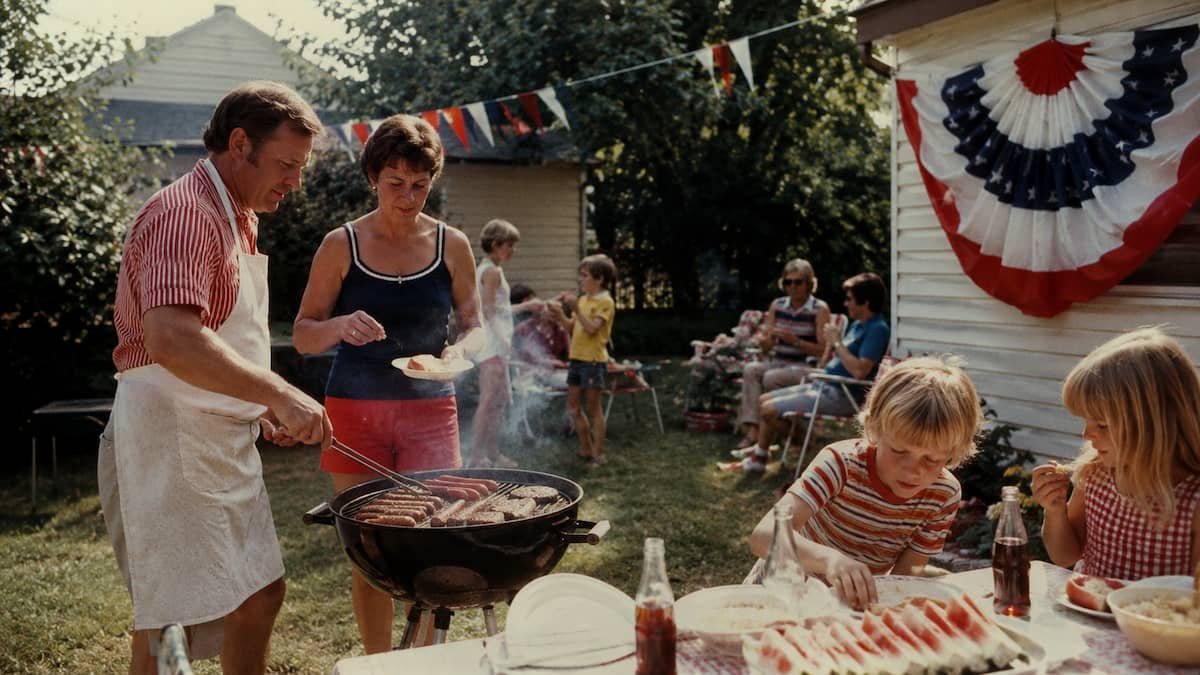
For many families, the day began at home. Dad might be standing near a charcoal grill, carefully watching burgers and hot dogs while smoke curled into the warm July air. Mom might be carrying out trays of potato salad, deviled eggs, baked beans, watermelon slices or a colorful Jell-O mold that looked like it belonged at every 1970s gathering.
The backyard was often the center of the day. There were picnic tables covered with plastic tablecloths, coolers filled with soda, and lawn chairs arranged in little circles where adults talked for hours. Kids did not need much entertainment. A sprinkler, a bicycle, a baseball glove or a pack of sparklers could keep them busy until sunset.
It was the kind of holiday where neighbors drifted in and out without much planning. Someone brought chips. Someone else brought a casserole. The screen door opened and closed all afternoon.
Small-Town Parades and Big Red, White and Blue Energy
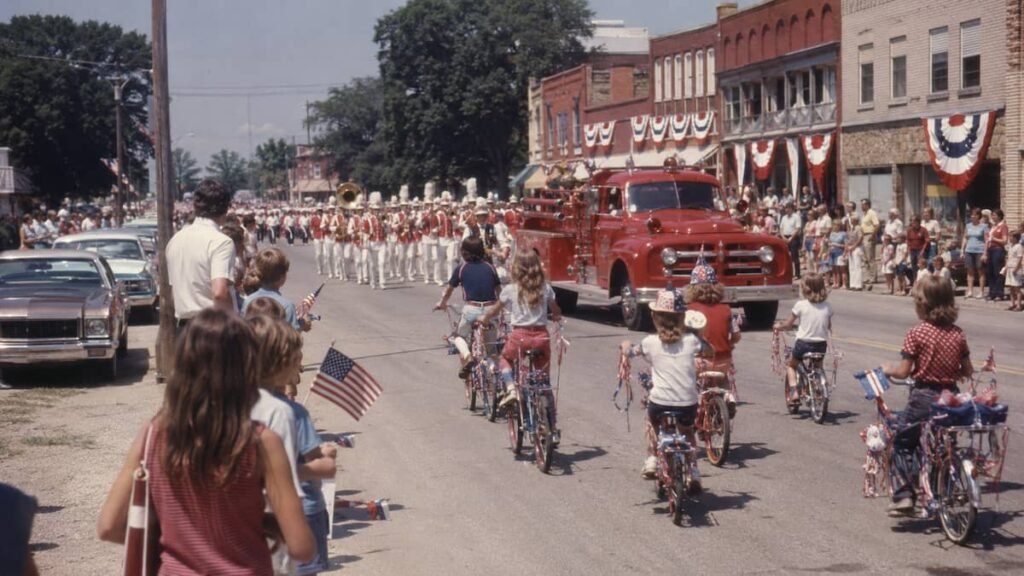
Across America, Fourth of July parades were a major part of the celebration. In small towns and city neighborhoods, people lined the streets to watch marching bands, veterans’ groups, fire trucks, local beauty queens, Boy Scouts, Girl Scouts and decorated bicycles roll by.
Children waved small American flags. Some wore red, white and blue T-shirts, striped shorts or homemade outfits that looked like they came straight from a family photo album. Fire engines were often a highlight, especially when they sounded their sirens and tossed candy to the crowd.
The 1970s had a special look all its own. Wide collars, tube socks, denim cutoffs, halter tops, terry cloth shorts and oversized sunglasses all became part of the summer scene. Looking back now, even the casual outfits in old Fourth of July photos feel like a time capsule.
The Soundtrack of a 1970s July Fourth
Music was everywhere. A radio on the porch could turn an ordinary cookout into a full afternoon memory. Depending on the year, you might hear Creedence Clearwater Revival, Chicago, Elton John, The Eagles, Stevie Wonder, Fleetwood Mac, Linda Ronstadt or the Bee Gees.
The songs were not always patriotic, but they were part of the atmosphere. They played behind the laughter, the clinking soda bottles, the baseball games in the yard and the long wait for fireworks. For many people, hearing a certain 70s hit today can still bring back the feeling of a hot July evening.
The Fourth of July was also one of those days when generations mixed naturally. Grandparents sat in the shade. Parents managed the grill. Teenagers tried to look cool. Younger kids counted the hours until dark.
Fireworks, Sparklers and Waiting for Nightfall
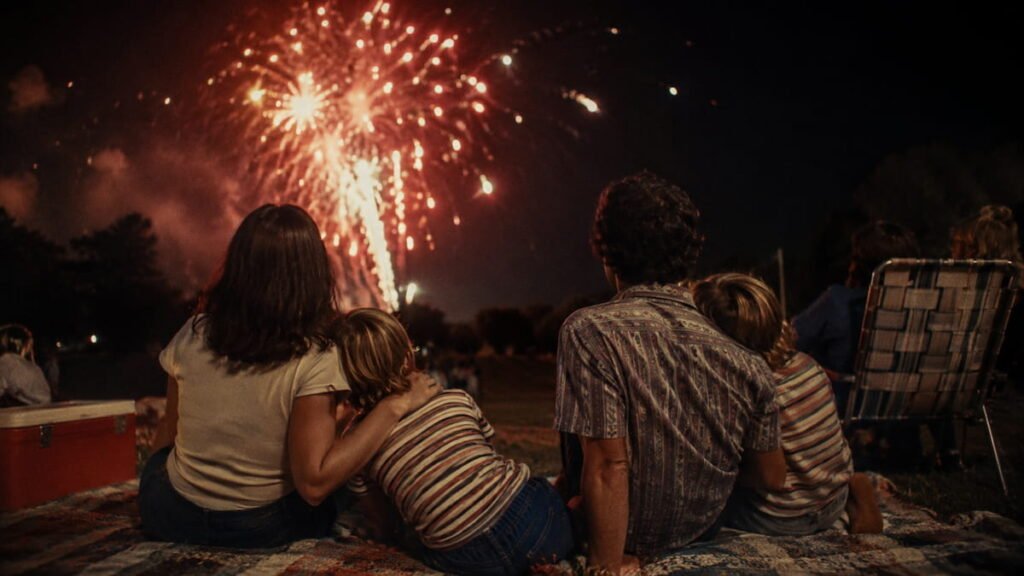
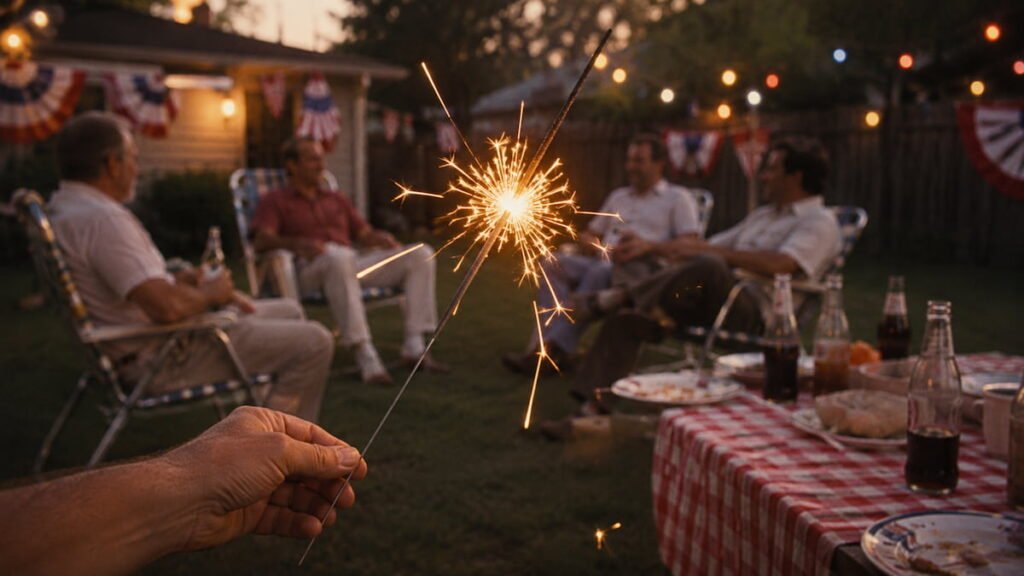
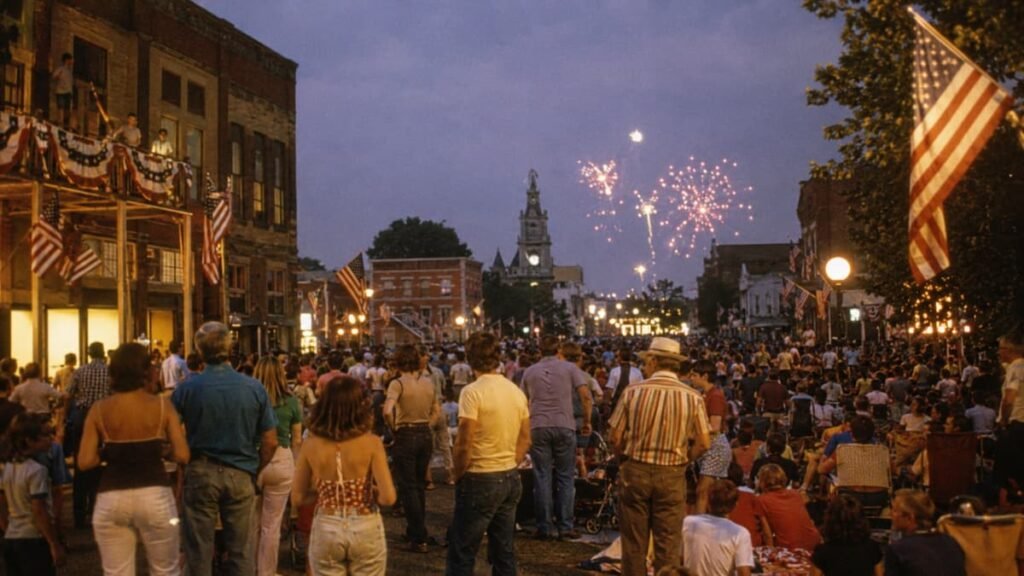
For kids, the real magic often started after sunset. Sparklers were held carefully at arm’s length, leaving bright trails in the air. Firecrackers popped in the distance. Families walked to parks, school fields or town squares to find the best view of the fireworks.
There was usually a long wait. Blankets were spread on the grass. Parents told kids to sit still. Someone had a flashlight. Someone else had a cooler. Then the first firework climbed into the sky and burst open, and suddenly the whole day felt worth it.
The displays may not have been as computerized or choreographed as many are today, but that was part of the charm. Every boom felt surprising. Every flash seemed enormous.
1976: The Bicentennial Made Everything Bigger
The Fourth of July always mattered, but in 1976 it became something much larger. That year marked the 200th anniversary of American independence, and the Bicentennial turned the entire country red, white and blue.
There were special parades, ceremonies, souvenirs, coins, stamps, TV specials, community projects and patriotic decorations everywhere. President Gerald Ford attended Bicentennial events on July 4, 1976, including ceremonies connected to Valley Forge, Philadelphia and New York Harbor, before watching fireworks in Washington, D.C. that evening.
In New York Harbor, tall ships and naval vessels became part of the massive celebration. Operation Sail brought historic sailing ships to the harbor, creating one of the most memorable public images of the Bicentennial.
For many Americans who lived through it, 1976 did not feel like just another Fourth of July. It felt like the whole country had decided to throw one enormous birthday party.
The Bicentennial Look
One of the most memorable parts of 1976 was the visual style. Everything seemed to carry a patriotic design. There were Bicentennial logos, flags, banners, commemorative plates, mugs, patches, T-shirts and even cars decorated for the occasion.
Stores leaned into the theme. Towns painted fire hydrants. Schools and community groups organized historical projects. Families bought souvenirs that still turn up today in attics, flea markets and antique booths.
The Bicentennial mixed history with 1970s kitsch in a way only that decade could. It was proud, colorful, sometimes over-the-top, and completely unforgettable.
A Summer Night That Stayed With People
Part of the reason those Fourth of July memories still feel so vivid is that they were built from ordinary things: paper plates, smoky grills, bare feet in the grass, sparklers after sunset and tired kids falling asleep in the back seat on the way home.
The celebrations were not polished or perfect. They were homemade, a little loud, a little messy and full of small moments that became family memories.
And in 1976, with the Bicentennial everywhere, those memories became even bigger. Flags on porches, parades in town centers, red, white and blue decorations in store windows, and fireworks that seemed to belong to the whole country.
For many who were there, the Fourth of July in the 1970s still feels like a long summer evening that never fully ended.