
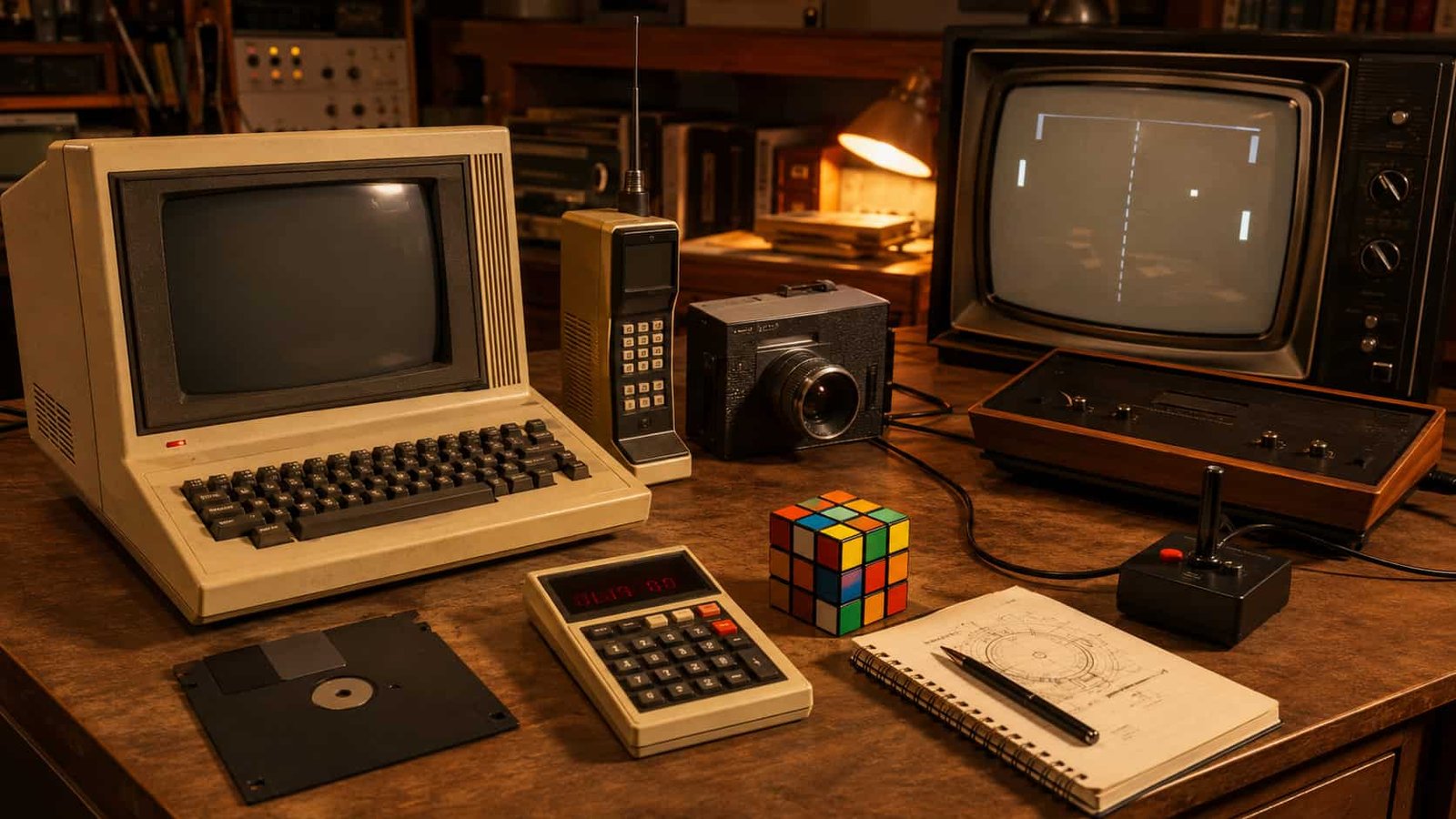
The 1970s are remembered for disco, flared jeans and unforgettable music, but the decade was also a remarkable age of invention. Many technologies now considered ordinary began in laboratories, offices and garages during these ten years.
Some were completely new. Others were first demonstrated, commercialized or made practical during the decade. Together, these inventions from the 1970s changed how people communicate, work, travel, play and care for their health.
What Was Invented in the 1970s?
Major 1970s inventions included the microprocessor, network email, the handheld mobile phone, the digital camera and the first home video game console. The decade also produced important advances in medical imaging, biotechnology and cleaner transportation.
Technology and Communication Inventions
1. The Microprocessor
Intel introduced the 4004 in 1971, placing a programmable central processing unit on a single chip. Small by modern standards, it helped make calculators, computers and countless electronic devices more compact and affordable.
2. Network Email
In 1971, Ray Tomlinson developed a way to send messages between computers connected to ARPANET. He also selected the @ symbol to separate a user’s name from the host computer, creating a format that remains familiar today.
3. The Handheld Mobile Phone
Motorola engineer Martin Cooper made the first widely recognized handheld cellular phone call on April 3, 1973. The prototype was bulky and impractical, but it introduced the idea of calling a person rather than a fixed location.
4. The Digital Camera
Kodak engineer Steven Sasson built the first self-contained digital camera in 1975. The toaster-sized prototype captured black-and-white images at only 0.01 megapixels and stored them digitally instead of using photographic film.
5. The Personal Computer
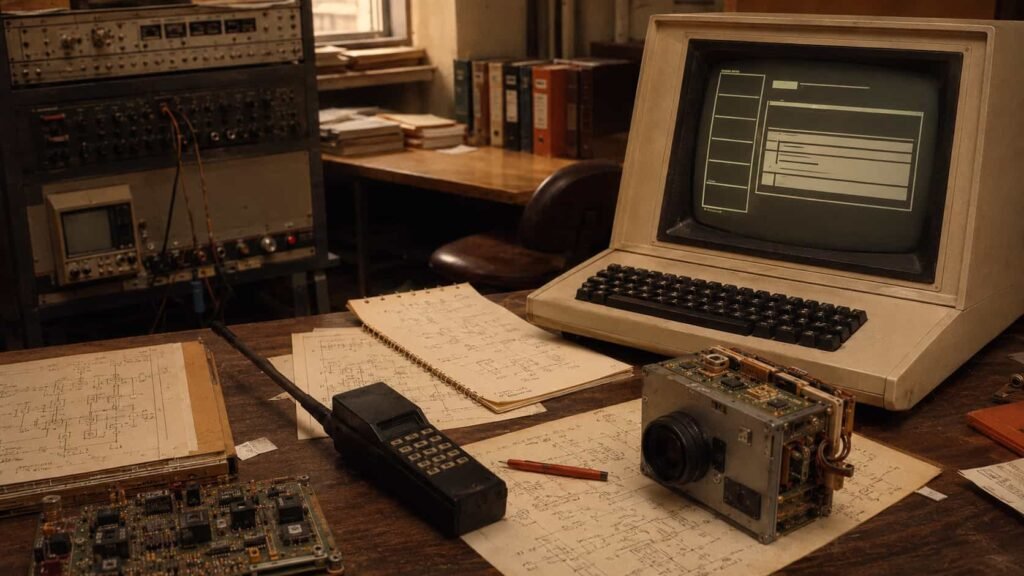
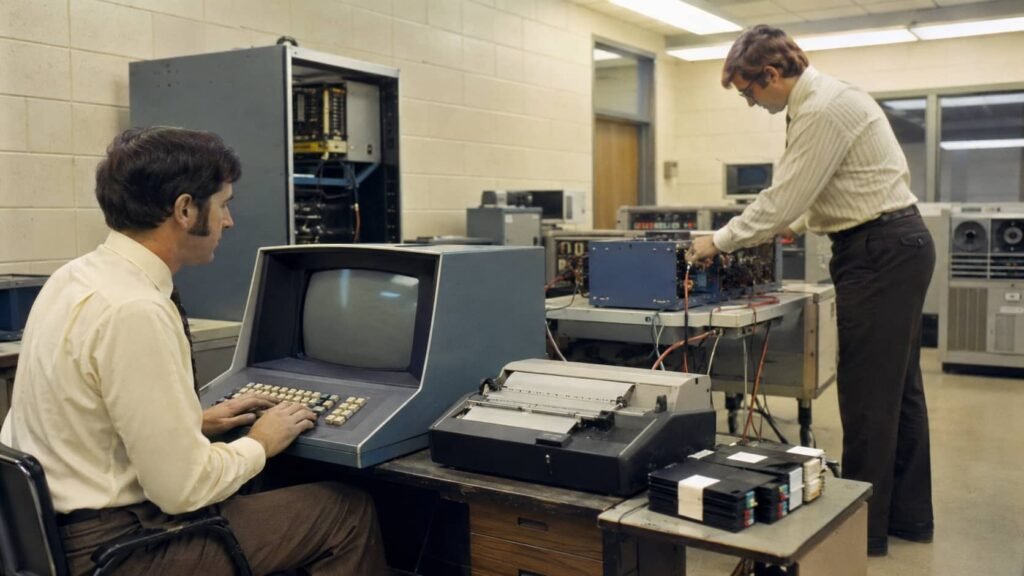
Machines such as the Kenbak-1, Altair 8800, Apple II and Commodore PET helped move computing beyond universities and large companies. By the end of the decade, owning a computer at home no longer seemed like science fiction.
6. Ethernet
Robert Metcalfe and David Boggs developed Ethernet at Xerox PARC in 1973. It allowed nearby computers to exchange information and eventually became one of the foundations of wired computer networks.
7. The Laser Printer
Gary Starkweather developed the first working laser printer at Xerox PARC during the early 1970s. By combining laser technology with photocopying, the system made fast and precise computer printing possible.
8. The Floppy Disk
IBM began selling floppy disk drives in 1971. Unlike large reels of magnetic tape, the removable disk made it easier to install software and transfer information between computers.
Entertainment and Everyday Life
9. The Home Video Game Console
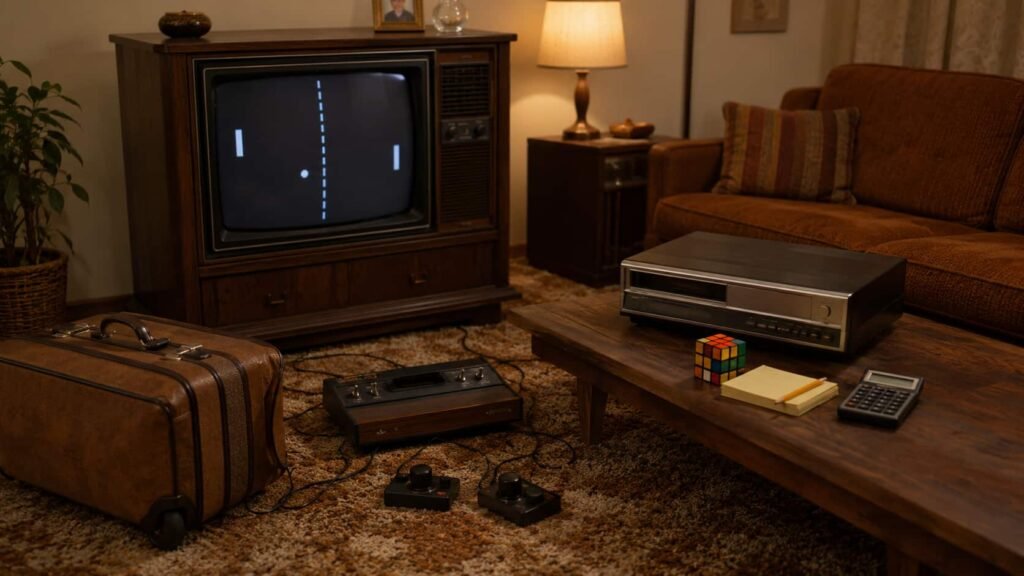
The Magnavox Odyssey reached American stores in 1972. Players connected it to a television and controlled simple on-screen games, establishing the basic idea behind every home console that followed.
10. Pong
Atari released Pong as an arcade game in 1972. Its simple table-tennis action became a sensation and demonstrated that electronic games could become a profitable form of mass entertainment.
11. Home Video Recorders
Sony launched Betamax in 1975, followed by JVC’s VHS format in 1976. Families could record television programs and watch movies at home, permanently changing viewing habits.
12. The Pocket Calculator
Handheld electronic calculators became commercially available at the beginning of the decade. They quickly replaced many slide rules and made complicated calculations easier for students, shopkeepers and office workers.
13. The Rubik’s Cube
Hungarian professor Ernő Rubik created his three-dimensional puzzle in 1974. Originally designed to explore spatial relationships, the colorful cube became one of the most recognizable puzzles ever sold.
14. Post-it Notes
3M scientist Spencer Silver had developed a reusable, low-strength adhesive, but Art Fry found its ideal purpose in 1974: bookmarks that stayed in place without damaging the page. Post-it Notes reached the wider market several years later.
15. Wheeled Luggage
Bernard Sadow received a patent for rolling luggage in 1972 after adding wheels and a strap to a suitcase. The design initially looked unusual, but it helped transform how travelers moved through airports.
16. The Disposable Lighter
BIC introduced its disposable pocket lighter in 1973. Its low price, consistent flame and simple design turned an everyday tool into an inexpensive product that could be sold around the world.
Medical and Environmental Breakthroughs
17. The Home Pregnancy Test
The FDA approved the first at-home pregnancy test in 1977, with the product becoming available the following year. It allowed women to test privately without first visiting a doctor or laboratory.
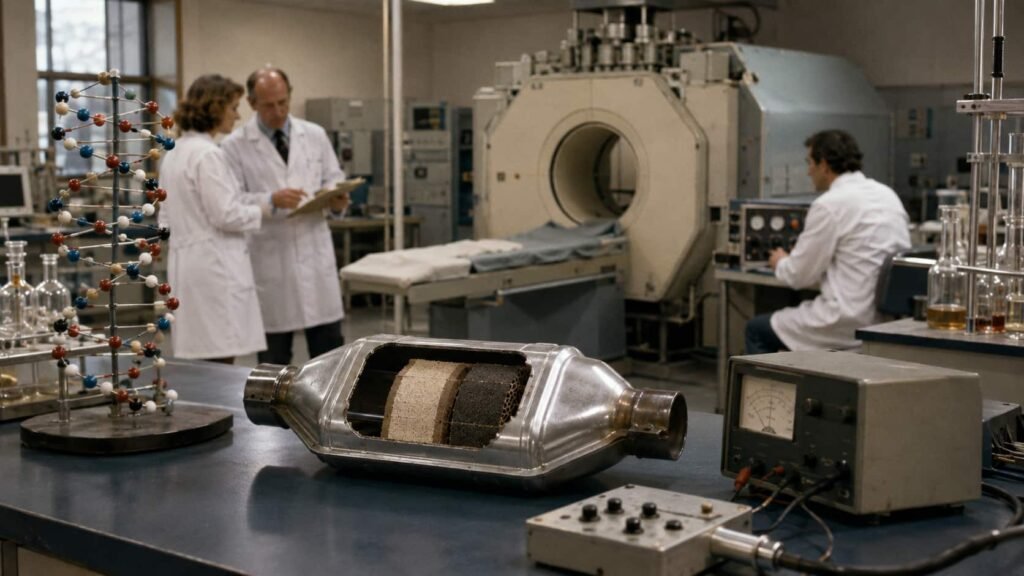
18. Magnetic Resonance Imaging
Paul Lauterbur and Peter Mansfield developed crucial MRI methods during the 1970s. Their work eventually allowed doctors to create detailed images of organs and soft tissue without using ionizing radiation.
19. Recombinant DNA Technology
Stanley Cohen and Herbert Boyer demonstrated practical gene-cloning methods in 1973. Their research helped launch modern biotechnology and later supported the production of genetically engineered medicines.
20. Automotive Catalytic Converters
Catalytic converters existed earlier, but they became standard equipment on many American cars beginning with the 1975 model year. By converting harmful exhaust gases into less harmful substances, they contributed to cleaner urban air.
The Future Was Already Taking Shape
The 1970s did not merely imagine the future. The decade supplied many of its building blocks. Every email, smartphone photograph, printed document, video game and medical scan carries part of an era better known for vinyl records, lava lamps and disco balls.
