
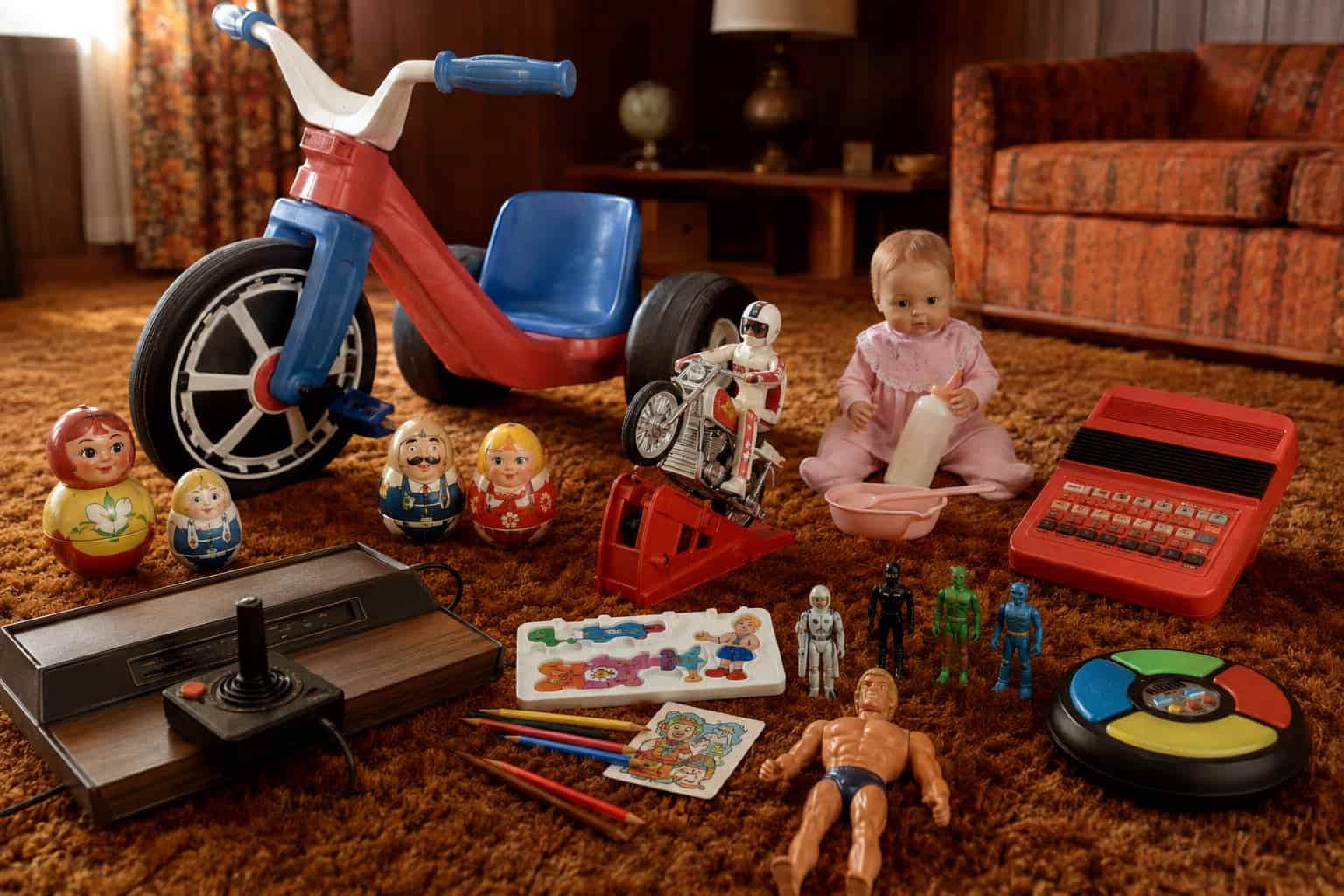
Growing up in the 1970s meant making your own adventures. There were no tablets, streaming services or downloadable games. A toy only had to offer one clever idea, and a child’s imagination took care of the rest.
Some 70s toys were wonderfully simple. Weebles rocked back and forth, Stretch Armstrong could be pulled across the room and Shrinky Dinks transformed inside the kitchen oven. Others introduced children to a new electronic future filled with flashing lights, robotic voices and video games.
These ten toys were more than temporary crazes. They became part of what childhood in the 1970s looked, sounded and felt like.
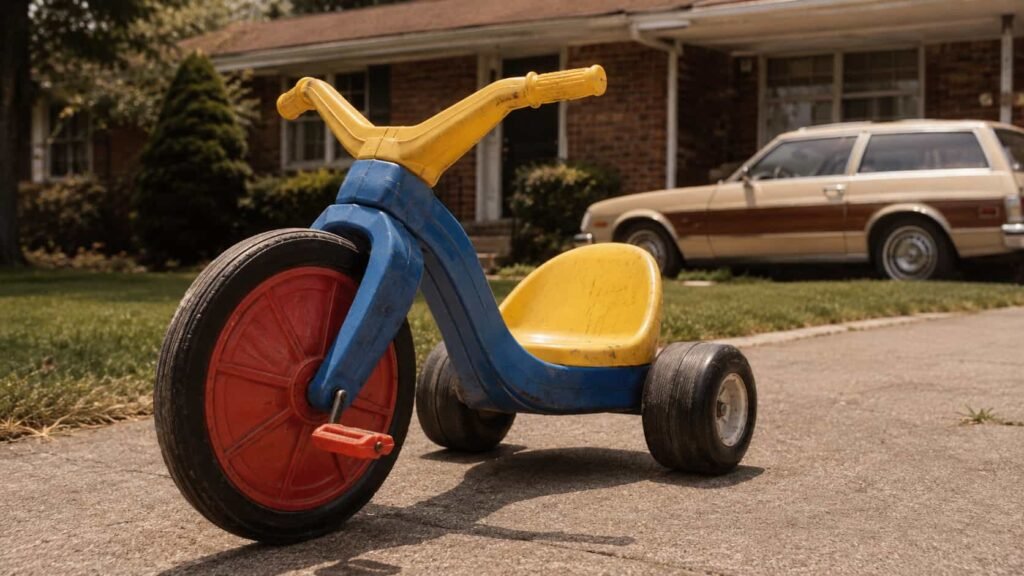
1. Big Wheel
The Big Wheel was technically a tricycle, but riding one felt more like driving a tiny racing car.
Its oversized front wheel, low plastic seat and wide handlebars placed children only a few inches above the pavement. That low position made even an ordinary driveway seem like a racetrack. The best riders learned to turn sharply, skid sideways and wear holes into the plastic rear wheels.
Louis Marx and Company introduced the original Big Wheel in 1969, just in time for it to become one of the defining outdoor toys of the following decade. Its plastic construction also made it lighter and less expensive than a traditional metal tricycle.
Parents probably remember the sound as clearly as the toy itself. Those hard plastic wheels created an unmistakable rumble that could be heard all the way down the street.
2. Weebles
Few advertising slogans stayed in people’s memories as successfully as: “Weebles wobble, but they don’t fall down.”
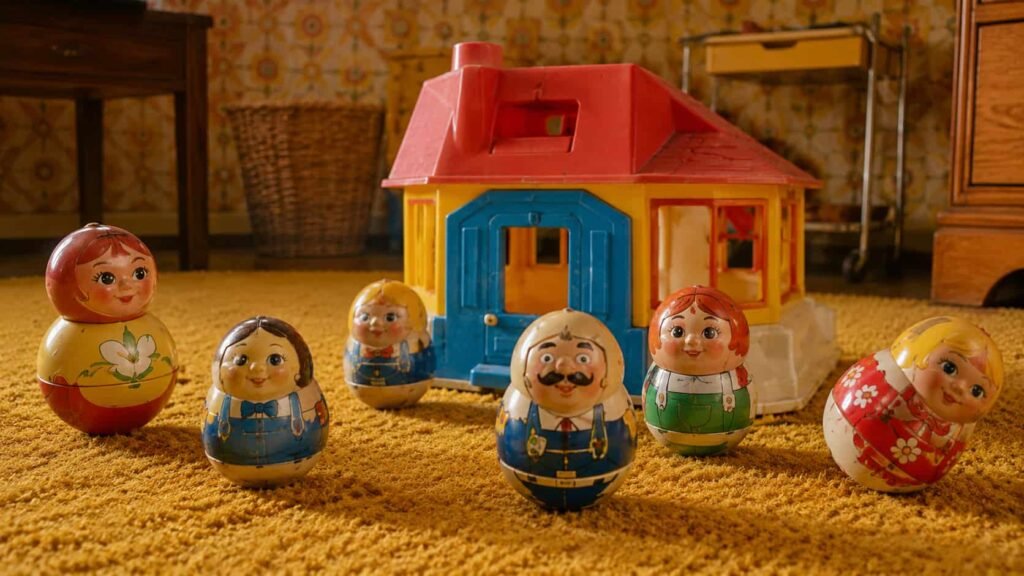
Introduced by Playskool in 1971, Weebles were small, egg-shaped characters with weighted bottoms. Whenever one was pushed over, it rocked from side to side before standing upright again. It was a simple idea, but children found countless ways to test whether the slogan was really true.
The figures soon received their own houses, vehicles, playgrounds, treehouses and themed playsets. A child could create an entire miniature neighborhood populated by smiling characters that simply refused to stay on the ground.
Weebles were nearly indestructible, easy to carry and especially difficult to lose under furniture because they rarely stopped moving quietly.
3. Evel Knievel Stunt Cycle
Evel Knievel was one of the most famous daredevils of the 1970s. His televised motorcycle jumps made him seem like a real-life action hero, so it was inevitable that children would want to recreate his stunts at home.
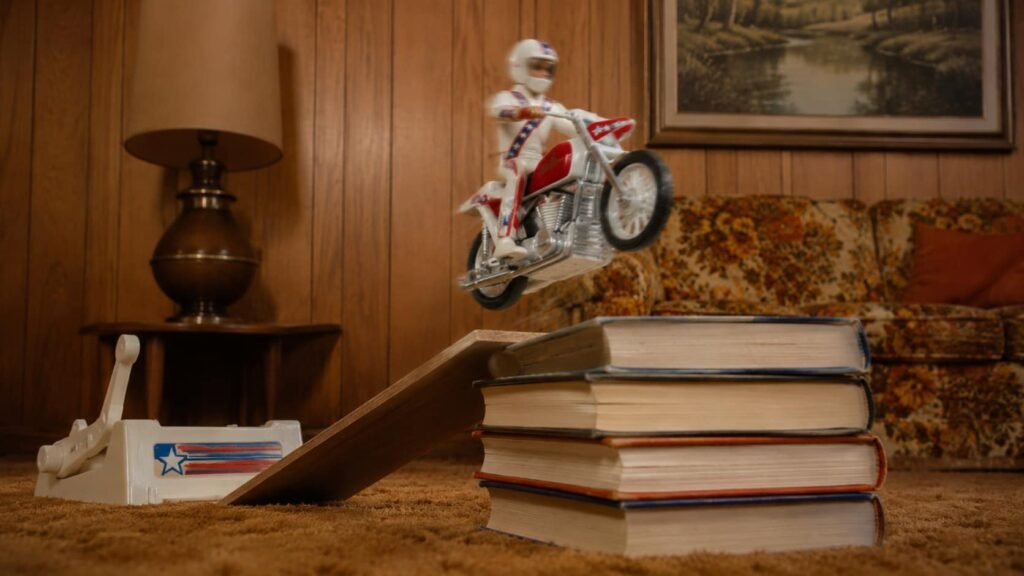
Ideal released the Evel Knievel Stunt Cycle in 1973. The set included a motorcycle, a poseable rider and a launcher with a hand crank. After building up enough speed, children released the motorcycle and watched it race across the floor.
The original toy line was sold throughout much of the decade and became one of the most memorable action toys of its era.
Official ramps were available, but most children preferred building their own. Books, boxes, wooden boards and furniture became increasingly dangerous obstacle courses. Successful landings were satisfying, but spectacular crashes were often more entertaining.
4. Baby Alive
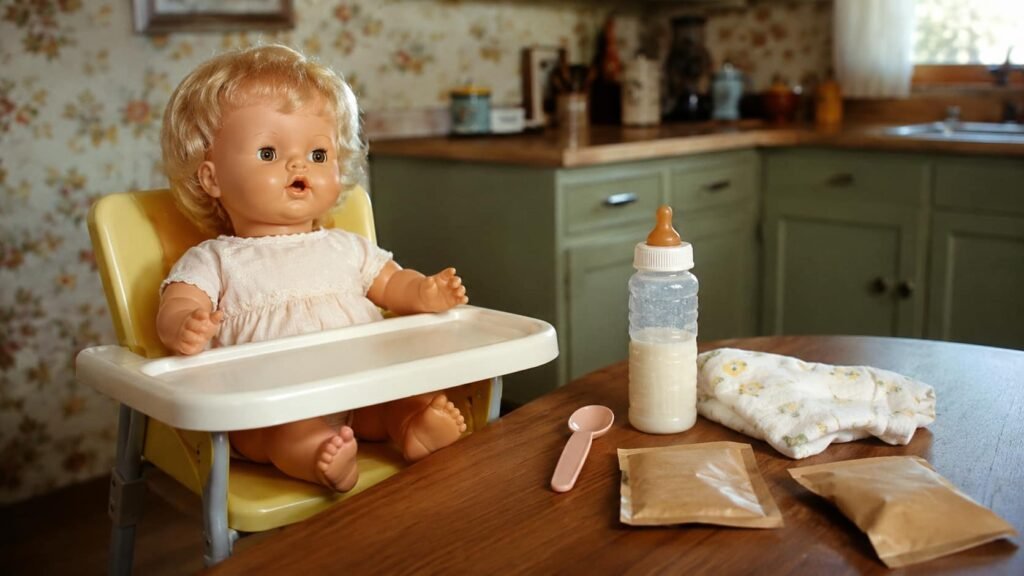
Baby Alive promised something that most earlier dolls could not do: she could actually eat.
Kenner introduced the original Baby Alive doll in 1973. Children mixed powdered food with water and fed it to the doll using a special spoon. A mechanical mouth helped move the food through the doll, eventually creating a dirty diaper that needed to be changed.
It was imaginative, realistic and more than a little messy. Food could become stuck inside the doll, especially when cleaning instructions were ignored. That inconvenience did little to reduce its popularity.
For children who enjoyed pretending to care for a real baby, the feeding bottle, diapers and spoon made Baby Alive feel far more interactive than a traditional doll. For parents, it introduced an entirely new kind of toy cleanup.
5. Shrinky Dinks
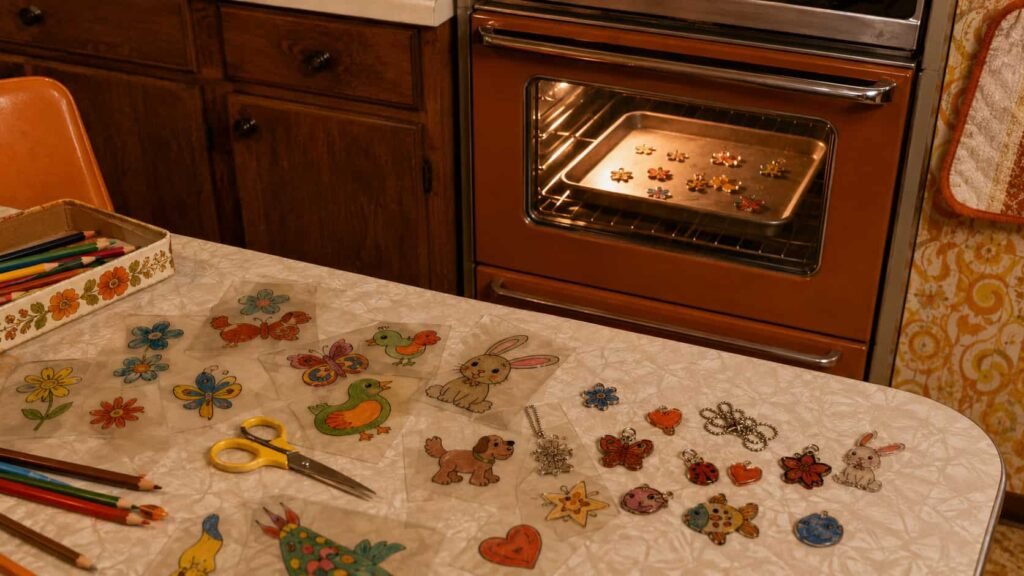
Shrinky Dinks turned an ordinary craft activity into what looked like a miniature science experiment.
Children colored designs on thin sheets of plastic, carefully cut them out and placed them inside a warm oven with adult supervision. The pieces curled, twisted and appeared to ruin themselves before flattening into smaller, thicker plastic decorations.
The craft toy was invented in Wisconsin in 1973. The special polystyrene sheets shrank to roughly one-third of their original dimensions when heated while becoming much thicker and more rigid.
Finished pieces could become charms, keychains, ornaments or jewelry. Yet the most memorable part was usually standing in front of the oven and watching the plastic suddenly begin to move.
6. Stretch Armstrong
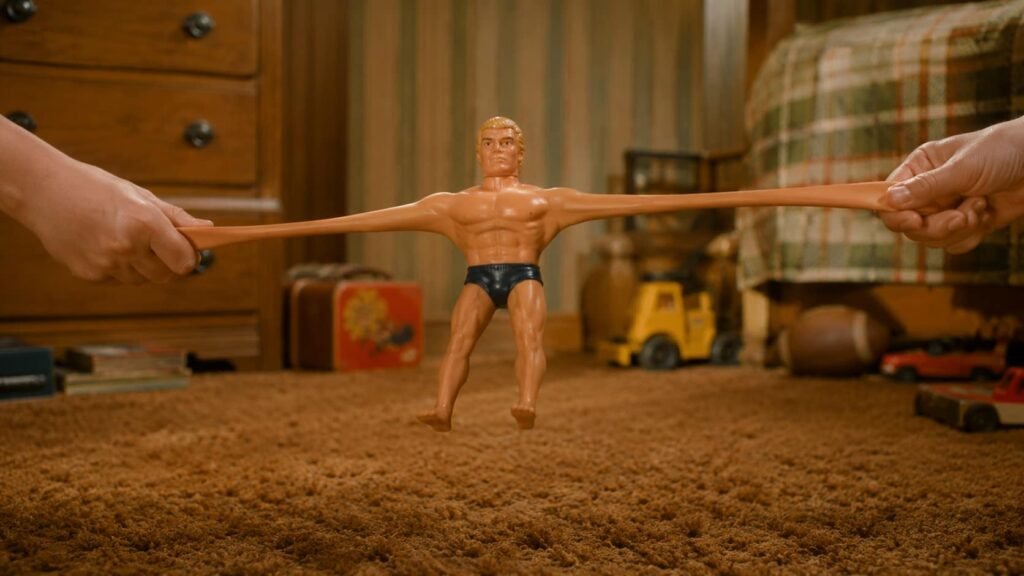
Stretch Armstrong looked like a muscular action figure, but his real appeal was hidden beneath his rubber skin.
Kenner introduced the original figure in 1976. Its flexible body was filled with a thick gel-like material that allowed its arms and legs to be pulled several times beyond their normal length. Once released, Stretch slowly returned to his familiar shape.
Naturally, children wanted to discover exactly how far he could stretch. One child grabbed an arm, another held a leg and the experiment continued until someone became nervous.
Many original figures eventually developed small tears or leaks after years of ambitious testing. That helps explain why a well-preserved vintage Stretch Armstrong can be difficult to find today. The toy was designed to be stretched, but children treated that invitation as a personal challenge.
7. Hot Wheels
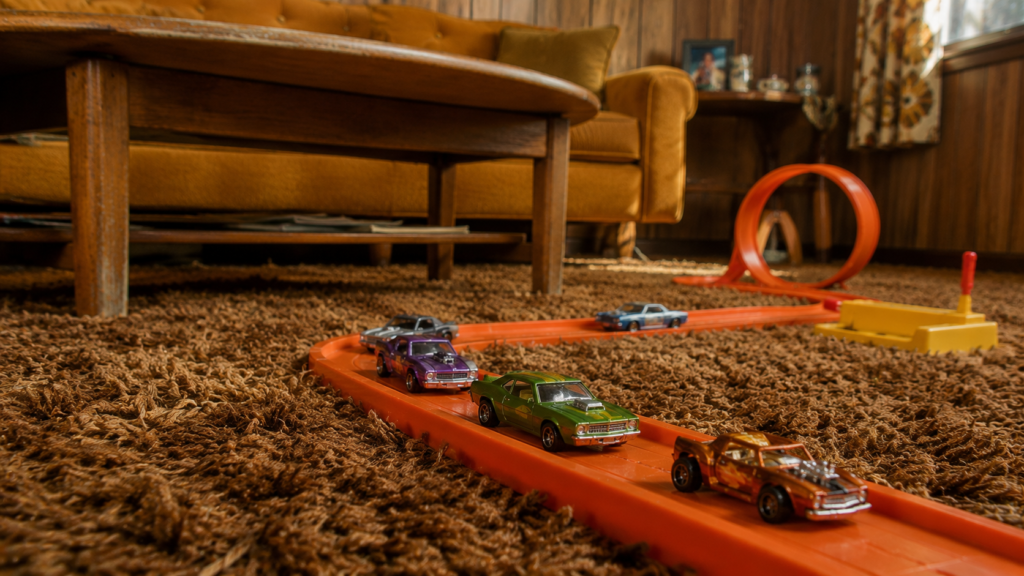
Hot Wheels cars turned floors, tables and furniture into miniature racetracks.
Although Mattel introduced the first Hot Wheels cars in 1968, the brand became a major part of childhood throughout the 1970s. The small die-cast vehicles stood out because of their bright paintwork, exaggerated designs and smooth-running wheels.
Plastic track pieces allowed children to build long downhill courses, sharp curves and dramatic jumps. Loops and launchers made the cars move far faster than traditional toy vehicles, although the track usually required several attempts before everything stayed connected.
Collectors searched for different colors and unusual fantasy models, while lost cars regularly disappeared beneath sofas and cabinets. A few orange track sections and a handful of cars were enough to occupy an entire afternoon.
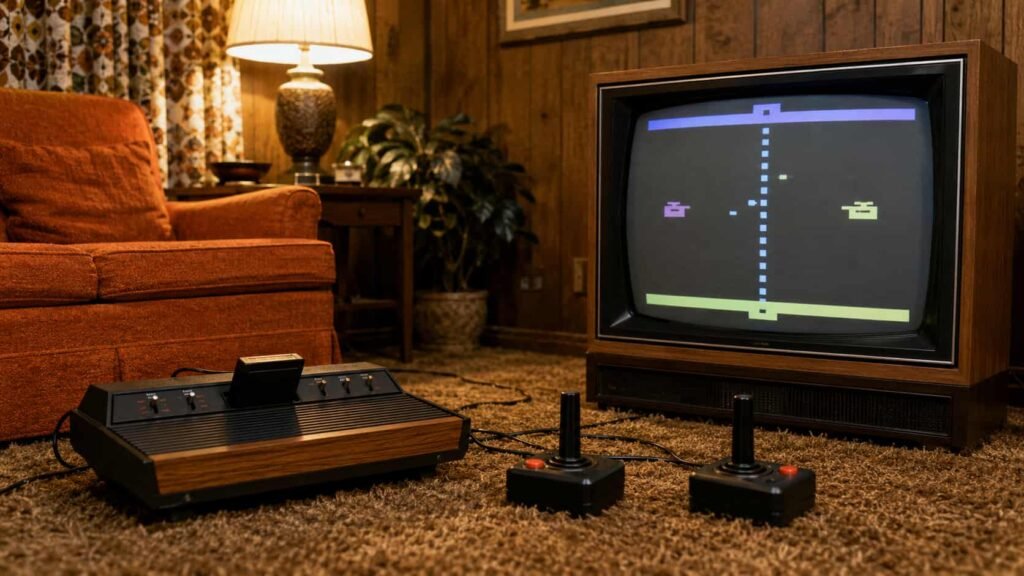
8. Atari Video Computer System
The Atari Video Computer System brought a completely new kind of toy into the family living room.
Released in 1977 and later renamed the Atari 2600, the console connected to a television and used interchangeable game cartridges. Its black joystick had a single red button, but that was enough to control tanks, spaceships, racing cars and bouncing blocks.
The graphics were simple, even by the standards of later consoles. Yet controlling something on the television screen felt revolutionary. Games such as Combat, Breakout and Video Olympics introduced families to entertainment that could be changed simply by inserting another cartridge.
The Atari did not immediately replace traditional toys, but it offered a glimpse of where childhood was heading. By the end of the decade, playtime was beginning to move from the carpet to the television screen.
9. Simon
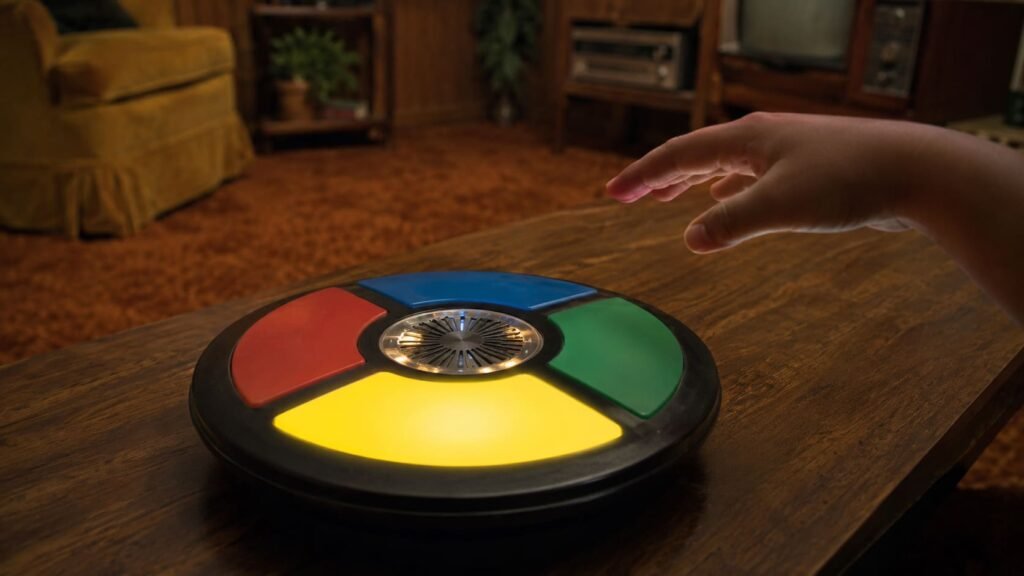
Simon was easy to understand and surprisingly difficult to master.
The circular electronic game contained four large colored buttons. It played a sequence of lights and sounds, and the player had to repeat the pattern correctly. Every successful round added another step, turning a simple memory exercise into a nerve-racking challenge.
Inventor Ralph Baer developed Simon after seeing an earlier arcade memory game. Milton Bradley released it in 1978, and its combination of portable electronics, colored lights and distinctive tones made it an immediate success.
Simon worked as both a solo game and a group activity. A room could fall silent as the sequence grew longer, with everyone waiting for the player to press the wrong color.
One mistake produced the unmistakable sound of failure, followed by someone else insisting that their turn would be better.
10. Speak & Spell
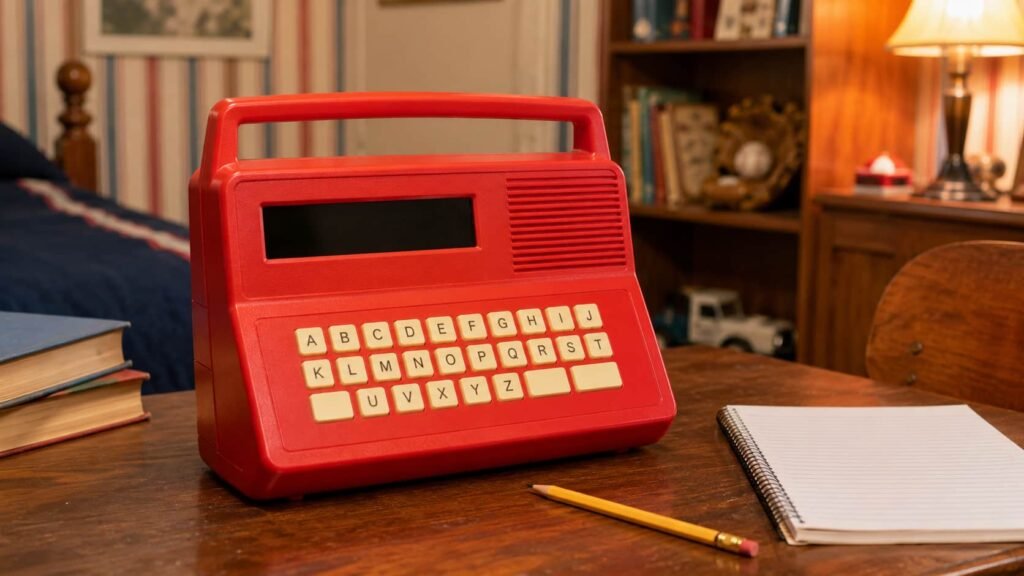
Speak & Spell looked as though it had arrived from the future.
Texas Instruments introduced the educational toy in 1978. It spoke words using an electronic voice and asked children to type the correct spelling on its keyboard. The machine then announced whether the answer was right or wrong.
Its synthetic voice sounded unusual, but that was part of its charm. At a time when most electronic toys relied on beeps and flashing lights, hearing a portable machine pronounce complete words was remarkable.
Speak & Spell made educational play feel modern. Children could practice vocabulary and spelling independently, although many spent just as much time trying to make the robotic voice say something funny.
The most unforgettable toys from the 70s did not need constant updates or complicated instructions. They offered one strong idea and let children decide what happened next. A Big Wheel became a racing car, a stack of books became a motorcycle ramp and a handful of action figures became an entire galaxy.
Open an old toy box today and the memories often return before the toy is even lifted out.
